


Imagined Equality
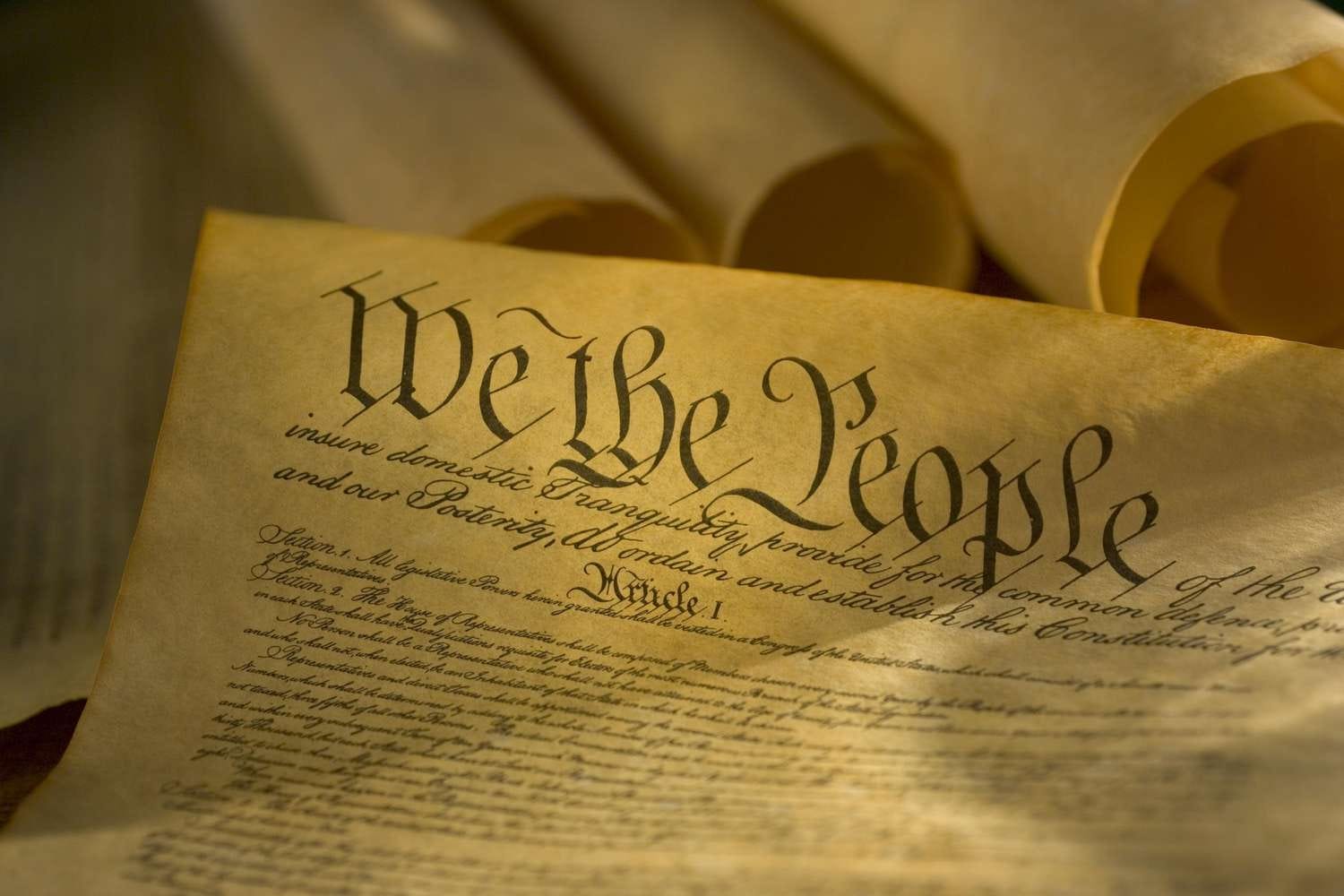
The time has come to revisit the social contract and ask the following fundamental questions: what is the basis of our political obligations and to what extent is it credible to say that we have “natural” rights? Human rights lawyers act as if this question is settled: as if our entitlements were birthed somewhere in the firmament and were just waiting to be discovered by Oxford graduates. Unless we can ground our rights and duties on a solid, commonly understood basis, we will remain susceptible to those who claim that our long won advances are one election away from abolition.
Traditionally the social contract was seen as tied to the idea of equality. Hobbes, Locke and later Rawls may have had very different conceptions of political life, but they all concurred on one foundational principle: that at the birth of sentient man we emerged free and equal. Hobbes justified the divine right of Kings, saying that we had given up our initial freedom for security. Locke founded his entire political theory on the idea that we are endowed with natural rights - life, liberty and property - and though we ceded some sovereignty for the fruits of cooperation, no legitimate government may trample on our natural entitlements. Meanwhile, Rawls equated justice with fairness, claiming that although there was no historical moment when a social contract was signed, we should nonetheless act fairly by legislating according to what we would have agreed before entering into the reality of society. Although the three thinkers view our current inequality differently - some justifying it, some seeking to mitigate it - all, nonetheless, insist on an unreality: that equality was the natural state of Man.
The Socially Conservative Alliance: The Basis of the Social “Contract”
We had to wait until 2025 to hear from a figure who based his observations on the real world. Ashok Panniker, who we were honoured to host here at Guerre and Shalom, stated the facts plainly: society is based on inequality. Insofar as minorities and minority citizens are vested with rights, it is because the majority deigned to grant them; Some such rights trace their origins to the 12th century, others arrived more recently, but all necessitated the consent of the powerful. Though Justice would demand equality and monotheism conceived of equal dignity, no right came to be granted due to the mere benevolent pronouncement of abstract principle (however beautiful those principles may be).
Rather than by contract, implying, as it does, equal parties with full information and an absence of misrepresentation, liberal democratic norms were conceded by the powerful in return for something better: be that a guarantee against revolution or the formation of a coalition against another insurgent social group. Disraeli’s Conservatives extended the franchise, not because they valued the much missed political insights of the proletariat, but rather because they recognized in the values of the working class a mutually-shared social conservatism; a conservatism that would be invaluable in counteracting the influence of the merchants, metropolitan liberals and latterly, immigrants. The landed elites and the working poor shared the same worldview, the latter merely demanding some degree of political representation in order to ensure better working conditions. It was a small price to pay. It is no great sacrifice to grant the vote to those that will support you politically. In the 20th Century, Churchill drew the same lesson. Despite an initial reticence, he eventually grew to support women's suffrage. It wasn’t a question of principle, simply the clarity that they were to vote Conservative in great numbers!
For the majority of the 20th century, the working class formed the overwhelming majority of the national British population. Perhaps they still do. If the mere fact of underpaid employment was sufficient to predict voting behaviour, then the Labour party would have won election after election for over a hundred years. But at least one third of the working class have never selected the red voting box and the reason for that should now be clear: those voters place national patriotism as their highest priority. The great dilemma for the socially conservative poor is whether to vote according to economics or national identity. The balance has always determined the result of general elections. Where wages have won the day, so have the Socialists. But where the Reds have strayed from faith, flag and family, the Left have faltered. Given that the Conservatives have traditionally been seen as the natural party of (mass franchise) government demonstrates that enough of the working class have regularly allied themselves with their patriotic, wealthy countrymen.
Threats to the Social “Contract”
The balance of British Society can therefore be seen as delicate. The wealthy and well connected can use the continuing support of the conservative poor to maintain their privilege. If the price for this stability is nationalized health care, child benefits and out of work training, then the noblesse are happy to oblige. Decade after decade, they've been willing to offer marginally greater entitlements, so long as their estates have remained untouched. But what for them would be intolerable would be for British Society to become equal; which is to say equal opportunity for all to attain any position. The odd social riser from the depths of the slum is and was entirely acceptable. They would be accepted heartily into the Establishment. Indeed it is essential to maintain some degree of social mobility in order to legitimize the social structure in the eyes of the least well off. But just like Harvard in the era of Jewish quotas, there is a limit to the social mobility that can be properly tolerated.
So with living conditions ever improving, working life garnering ever greater rewards, social conservatism protected and the potential chance for advancement available to all, the elite- working class social contract remained healthily in force. But the threat to the social contract is the inverse.
If working class children are poorer than their parents; if real wages are falling like a stone and if social mobility - even of the most limited kind - appears to be grounding to a halt, then the stability of society is under threat. The cherry on the proverbial cake is far-left wokism. Insofar as left-wing politics is economic, it was and will continue to be supported by its working-class recipients. However, the moment that left wing thinking threatens the socially conservative consensus, all bets are off. What motivation does a working class citizen have to vote Left when, not only are their living conditions deteriorating, but their social beliefs are disregarded and mocked by their own representatives! National pride is at the heart of working-class culture. Small c conservatism is their lifeblood; the very cornerstone that made them unite with the wealthy 19th century elites. If the mainstream right or left are both incapable of guarding the national narrative, then neither will garner their votes. Rather they will turn to political forces that threaten the very political structure of society.
But don’t worry, at least in Britain. In order to maintain the status quo ante, we can be sure that the Westminster parties will soon change course. Judging the public mood to maintain national stability is in their political DNA. That’s why we’ve never had a revolution.
How Immigration affects the Social “Contract”
So if maintaining the cultural status quo is such a powerful force in Anglo-Saxon political life, how can we explain our attitudes towards immigrants, alternately welcoming and unsavoury. The social conservative, overwhelmingly the most powerful force in British -and presumably other - societies, judges immigration through the outlook hitherto laid out. Although the wandering stranger may want it otherwise - and perhaps with justice - the host community sees matters as being on a probationary basis. Outside of those (very few) who maintain an implacable xenophobia towards anyone different, the majority will seek to ascertain whether the newcomers are a threat to the status quo. The working class will be fearful that another foreigner has come to “take their jobs”. The toff will be concerned that the newcomer is more intelligent than they. And both will join in unison in their suspicion that their national way of life is under threat.
Where an immigrant group, after a long period of suspicion, shows that it contributes to the national economy in such a way that doesn't affect the locals’ own prospects, they will likely become accepted; particularly when the newcomers turn their hand to business and open previously untapped wealth streams. Culturally, it depends. Some natives will demand assimilation; others accept ghettoization. But what none will countenance is a minority affecting in any way the national culture of the majority. Thus the small Jewish community, which keeps itself to itself, embraces business and doesn't impinge on the life of others, was seen, after initial skepticism, as a valued member of the national community. Similar views are widely held on the Chinese, Hindu and Sikh communities for similar reasons.
By contrast, concerns about the growing Muslim Community stem from its increasing size and the perceived threat it poses to the national cultural life. This is not the essay to judge the veracity of those concerns; merely to state the nature of the British social contract. By a similar token, pre-Brexit immigration from Eastern Europe was seen as uncontrolled and, therefore, illegitimate: continuing without the usual probationary stage, where the successful integration of those arriving on our shores is judged by the conservative jury.
Here we see a crucial and destabilizing breach between working class and elite conservatives, the latter more globalised than in past eras. Where once they united in defense of their national way of life, they now face schism. Tempted by the fool’s gold of cheap, imported labour, the rich now support mass immigration while the working poor resist it. It isn't so much that the rich welcome large-scale, unintegrated immigration, but rather, that, unlike the poor, they don’t have to face the consequences. More immobile, and singularly unable to escape to tax havens, the latter are left to face the effects when social policy goes awry.
It will be noted that Eastern European immigration has seen as much, if not more, hostility than Muslim immigration. With the former being white, European and Christian, we can clearly see that race is not the major issue. What binds the two very different groups is numbers. Many ultra-religious Jews, Sikhs, Hindus and others may have moeurs which diverge from the majority, but their numbers are such that majority life continues unawares. The socially conservative contract which binds remains in force.
Rather it is the feeling - right or wrong - that the national destiny is no longer in national hands that gnaws away at the cohesiveness of society. No-one decent believes that an ordinary, average Muslim is responsible for terrorism. The pertinent point is the assertiveness of that community's most outspoken leaders - bolstered as they are by large, unintegrated numbers - in trying to influence national moral-legal norms. If their numbers had more closely resembled those of the Jewish, Huguenot and Ugandan Asian newcomers, better integration - and acceptance - would no doubt have been the result.
Who are the (Social) Conservatives?
Insofar as religious and foreign-born minorities accept the unequal cultural domination of the “indigenous” majority at a national level, the social contract remains binding. In fact it is strengthened. Because Ashok was right. The biggest group in any society is its conservatives and few are more conservative than religious minorites. It is this very fact - the potential political coalition between the aristocratic rich, the working poor and the religious immigrant against the fashionable, intellectual, global class (me?) - that would encourage the ruling classes to spread the national net wider. The more social conservatives the better!
For in speaking of conservatives, one doesn’t merely mean the members of the predominant religious or ethnic group. The conservative is any citizen who lives within a majority cultural situation (Jews in Brooklyn, Hindus in Leicester, Christians everywhere…), has socially conservative instincts and wishes to rigidly maintain the traditions of their parents and grandparents. A Christian in rural England will clearly fall within the bracket of conservatism, but so does a religious Muslim in Bradford who lives among those of their own ethnicity or the Golders Green Jew residing where their co-religionists dwell in force. All who “live among their own”, irrespective of whether they live in a country where another faith predominates or merely an effective ghetto, are conservatives. Frankly speaking - for better or worse - a multi-faith society is one where communities live beside one another in the expectation that each are left to their own cultural devices and the majority can run national political institutions according to their own values and norms.
Are true minorities equal? And what is the basis of their rights?
A true member of a minority, which is to say one that dwells alone, has no real say - no true equality - and their civic rights are granted as a technicality and on the proviso that they don't disturb the conservative status quo. Speaking as one who is a minority of a minority, one who lives and has always lived among the widest possible diversity of society, I can cry rights and equality as much as I please: as a non-sectarian, non-English Briton, I have no real say. I must accept that. It is the basis of stability in my country and a fact that I may not challenge. All are equal, but some (the general majority and the ghettoised, conservative minorities) are far more equal than others.
Sometimes I vote right, sometimes left. I'm a true floating voter. And I'm certainly conservative in the general sense that I believe in gradual, evolutionary change. But culturally I'm an outsider, both within the wider national community and within my given ethnic minority group. I wasn't a party to the British social contract; neither to the Spanish nor to the Israeli. I submit to power, wherever I dwell, because I must. For me, there is no Terra Nullius.
I am grateful for my civil rights in the West and grateful is the operative word: because they were granted to me by my benevolent superiors, rather than contracted to me as an agreed right. I and my fellow travelers defend liberal democracy, because unlike conservative social contractors, who could tolerate living under a dictatorship that protected their national culture (à la Franco), our only chance is to defend the gift of freedom already ceded from above. Where you are not born free, you cling to any lifeboat of freedom. Where you are not born equal, you jealously guard any equality flung your way. And where you live in a Judeo-Christian society, formally built on the Genesis principle of individual dignity, you defend that dignity with the strength of a tiger.
The strong have power, the weak just the spoken word. The Hebrew Bible, the Common Law and the Bill of Rights: these were the blessings of history spoken against the stormy sea of (majority, conservative) nature. Rights aren’t species of natural justice because justice is anything but natural. Nature worships might. But it was our good fortune that the story of a group of powerless Egyptian slaves became a foundational story of the West. God was said to dwell with the humble and through the mighty adopting this tale as Scripture, the weak were given a fighting chance.
Our stake in society is precarious: beneficiaries of the true social contractors. So we cling to the Word: Justice as pronounced. And we, the few - the wandering, atomised few - submit humbly, but unequally, to its mighty, equalizing power.

Extra related reading:
Ashok’s essay on conservatism:
Ten Truths about Conservatives and their relationship to Liberal Democracy

PROLOGUE BY THE EDITOR (Daniel Clarke-Serret)
Daniel’s podcast on being in a true minority:
Ha'Ger (The Stranger)

[Image: Solomon Ibn Gabirol, the ultimate stranger, lived and cried in my city.]Guerre (French): WAR Shalom (Hebrew): Hello, Goodbye, PEACE Guerre and Shalom War and Peace Guerre (Hebrew): Convert Foreigner STRANGER
Thank you, @Daniel Clarke-Serret for taking my thesis about the centrality of conservatives in creating the democratic social contract- and running with it.
Readers will particularly appreciate his situating this in the British context, where centuries of hard-won minority rights are now threatened by an aggressive minority that sees no reason to either integrate- or (conveniently) ghettoize. As I say in my essay: https://open.substack.com/pub/villageidiotstudio/p/why-i-dont-attack-conservatives-or?r=2pal6b&utm_campaign=post&utm_medium=web&showWelcomeOnShare=false conservatives really don’t need a liberal democracy that gives equal rights and protection to minorities- that they do so is an extraordinary gift to them.
As Daniel makes it eminently clear, Rousseau, Locke and Rawls notwithstanding, there are no such things as ‘natural’ rights where humans emerged from the womb as equal and free. For one thing the newly born human is vulnerable, weak and exceptionally unfree. For another, the natural world is a jungle where the big beasts rule and the weak are at best serfs or at worst, lunch.
When (as in liberal democracies) the weak are bestowed rights and freedoms we have to be grateful for it. If we stare too hard into the mouth of the gift horse, it might bite our heads off.
Great analysis.