


EDITOR’S NOTE (Daniel Clarke-Serret):
As heavily advertised, we are today honoured to host the premier of Nachum Kaplan’s groundbreaking analysis of why the news media is obsessed about Israel and the conflict in Gaza. Nachum is a journalist, commentator, speaker, and C-suite media strategist to Fortune 500 companies. With more than 25 years international experience, he has held senior editorial positions and helped set the strategic direction in some of the world's leading newsrooms, including International Financing Review and Reuters (where he was once an Editor-in-Charge). His Substack can be accessed here (do subscribe).
So let us pose these urgent questions: Why in Gaza it is the Jihadists who provide the death statistics (indeed why is the Gaza conflict the only one where we hear death statistics at all)? How come the Ukraine invasion suddenly dropped off the news agenda after October 7th? Why have you never heard a thing from the DR Congo despite it suffering a nine country conflict that was the biggest since WW2? And why don’t we seem to give a damn about Rohingyan lives? Some reasons may surprise you. Others are more obvious, but only when Nachum confronts you directly with them … like journalists enjoying life in a sunny, democratic, cosmopolitan State instead of dwelling nervously in death-stalking Eritrea.
And how the hell are these journalists reporting from “inside Gaza” anyway? All will be revealed in this genuinely important article that you must SHARE.
I understand that the article is long. Very long. It’s called quality journalism and it’s something that used to roam the Earth in the age of the dodos. You may not be able to read it all now, so take your time, save it, savour it and SPREAD IT WIDELY.
Your world is about to change…
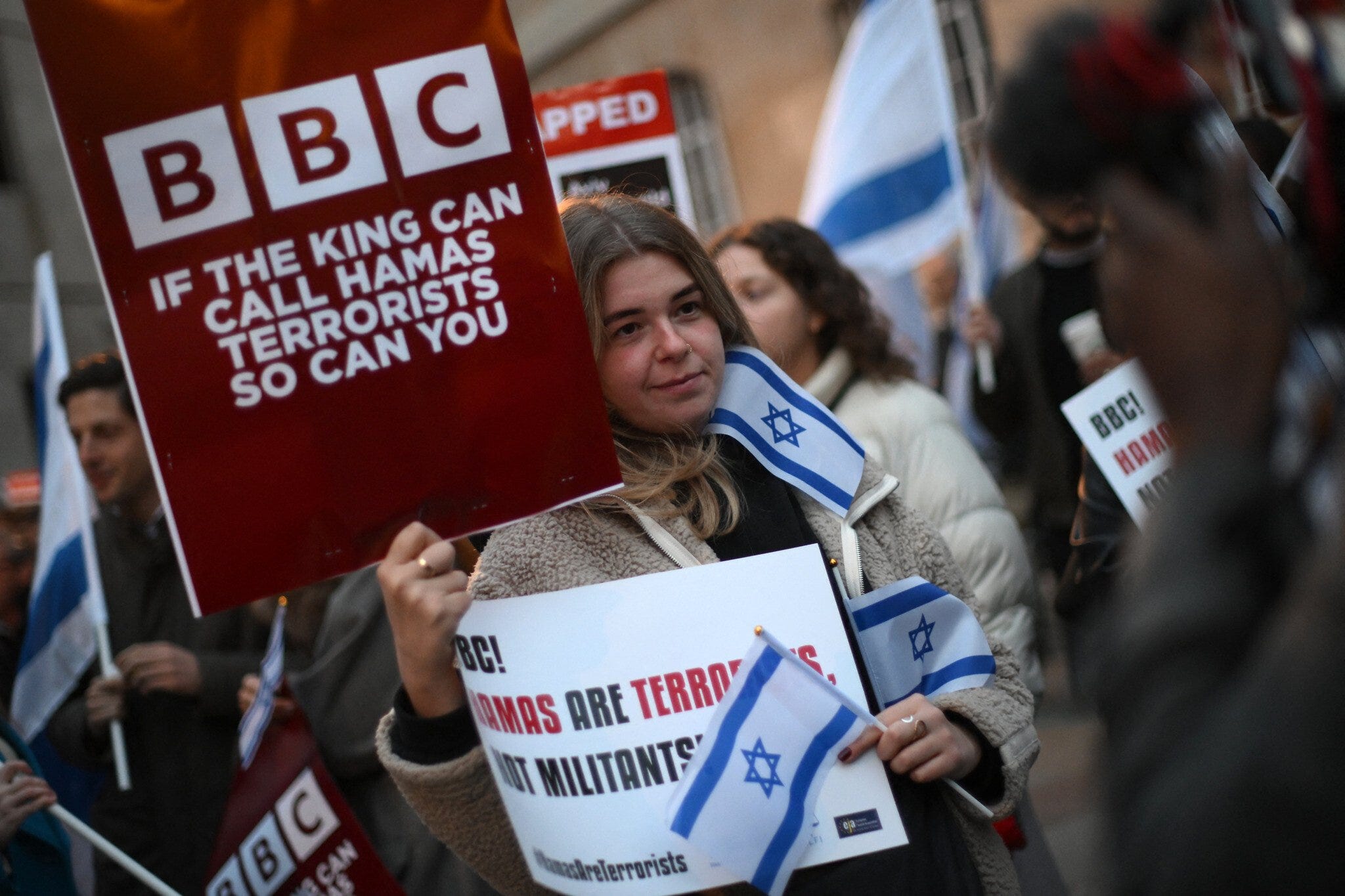
“Why the news media is anti-Israel and antisemitic” by Nachum Kaplan
A potent mix of technological change, an evolving media environment, the Left's takeover of universities and journalistic vanity lies behind the news media's anti-Israel bias.
Foreign correspondents are sitting in Tel Aviv hotel bars and reporting on Gaza as though they are there, creating the illusion that they are on the ground. The only way a journalist can be in Gaza is by being embedded with the IDF or by being with Hamas terrorists. The latter is possible only if you are a terrorist or Hamas sympathizer.
Unable to put their own reporters and cameramen on the ground, international media rely on stringers and freelancers in Gaza for information, photographs and videos.
…Their stringers and photojournalists are Hamas sympathizers, members and even terrorists. Even if they were not, they could not report freely from Gaza under Hamas rule.
Nachum Kaplan
It is hard to imagine, but there was a time when the mainstream media was not anti-Israel. In the 1970s and even into the 1980s, news reports on the Israel-Palestinian conflict - often then still referred to as the Arab-Israeli conflict - were about the Israel Defense Forces’ (IDF) daring deeds and seeming invincibility.
The world looked on in awe as the vastly outnumbered IDF vanquished multiple Arab armies in the 1967 Six-Day War. The IDF’s reputation was further burnished in the 1973 Yom Kippur War, where Israel fought back from the brink after being stunned in a surprise attack from Egypt and Syria.
Over time, however, the media fell out of love with Israel until it reached today’s nadir. Many leading global news organizations, which see themselves as having the highest editorial standards, are so hostile towards Israel that they routinely lie outright and double down when their biased reporting is called out.
It is surreal that the above paragraph is factual with no hyperbole required.
How this happened is a complex story of technological change, a changing media environment, the Left’s ideological hijacking of Western universities, and declining news media standards.
What a list! Here is what happened.
DOLLARS AND SENSE
i.
Media hostility towards Israel is part of a wider decline in journalistic standards. To be sure, there was never a golden age of journalism. That is nostalgic nonsense and the best thing for nostalgia is a bad memory. There were always newspapers that were good and bad, quality and tabloid, Right and Left and so on, but overall, quality has declined.
It is hard to pinpoint precisely when this deterioration began, but looking at news pre-internet and post-internet is a useful way to think about it.
The internet wrecked the news media’s business model and disintermediated the flow of news and information. Each put huge pressure on newsrooms, but in different ways.
Newspapers used to make money from selling advertising and selling copies. Papers were priced affordably enough to ensure mass readership, which publishers used to lure advertisers. Advertising, especially classified advertising, was where the real money was made. Newspaper proprietors and publishers referred to classified advertising as “Rivers of Gold” and this model had served the industry well for the better part of a century.
Once the internet came along, advertisers could reach their audiences directly, more effectively and more cheaply online, including through social media.
This smashed profitability, sending many newspapers bankrupt. Newsrooms began to shrink, so quality suffered. This was not a one-off moment. There have been, and continue to be, waves of job losses in global newsrooms.
There are still many first-rate journalists and excellent pieces of journalism being done. Yet, overall, standards have fallen to the point that it is hard to say there are any great newspapers anymore.
There was a time, for example, when mastheads such as the New York Times or The Times in London were considered among the “great newspapers of the world” to use the industry’s supercilious phrase. That is not even plausible anymore; it is laughable.
ii.
Newspapers have still not found a viable business model. This matters greatly because how news media funds itself influences what ends up being published and in the public discourse.
Al Jazeera, for example, is funded by the Qatari Government and is a mouthpiece for its demented Islamist worldview. Qatar has funded Hamas, allows its leaders to live there, and has been mediating talks between Israel and Hamas about the release of Israeli hostages. Clearly, Qatar has all sorts of conflicts of interest.
At least its biases are clear, so viewers can factor them into how much credibility they give its news. Its deserved credibility is zero, but many viewers may be unaware of this, which is exactly what Qatar is betting on.
The BBC, by contrast, funds itself largely through a license fee that the British public pays. This affords it a high degree of independence because British governments cannot cut its funding if they do not like what it reports. The downside is that the BBC is accountable mainly to itself. A lack of accountability is problematic in any publicly funded entity.
Not having a clear profit motive makes the BBC’s wild left-wing bias almost inevitable. Reading it feels like being trapped in a vast Marxist spiderweb. Nowhere is this more evident than in its coverage of Israel, which is so hostile and so inaccurate that it could pass as satire.
The Guardian, which is not behind a paywall, gets more than half its revenue from subscribers. It begs for money at the end of each story in its UK, US, and Australian editions. It boasts that this means billionaires and advertisers do not control it.
However, there is always a piper to pay. Only ideologues pay for something that is available for free, so the paper must produce content that suits its readers’ ideologies. Given this incentive structure, it is unsurprising that The Guardian is Marxist, with all the narrative-over-truth horror that implies. Its Israel coverage is about as accurate as all those movies that claim to be based on a true story.
iii.
Concurrently, the internet reduced the intermediary role that news media played in distributing information. Pre-internet, for example, when a government released inflation data, they would distribute it to journalists, who would report it. Today, governments publish such data themselves on their websites and on social media. The reporter’s role is redundant.
Without large advertising revenues, newsrooms realized that they needed to produce content that readers would pay for, and which they could not get online themselves. They did this by moving away from straight news reporting.
News is a business with a social function, so the need to make money can conflict with the goal of unbiased reporting. For example, editors must decide whether to publish stories that are critical of their biggest advertisers, sometimes under direct pressure from them.
Profitability does not ensure quality, but it does reduce the pressure on editors to pander to sponsors, advertisers and subscribers.
Reuters, the world’s oldest news agency where, full disclosure, I was once an Editor-in-Charge, demanded that its stories report more than just the facts and answer the key questions of “so what?” and “what’s next?”. The Wall Street Journal told its staff to think about “writing tomorrow’s news today”.
Journalists were asked to become analysts and soothsayers. Unsurprisingly, reporters are often poor analysts. The jobs require different skills. Even soothsayers are not good at soothsaying.
The internet also blurred the lines between print, radio, and television news, turning all media into digital platforms competing in a non-stop 24-hour news cycle. Newsrooms, now with skeleton staff because of plunging revenues, were being asked to produce higher value content, almost in real time. Inevitably, this lowered news quality and placed great stress on journalists.
Moving online also incentivized media to become more sensationalist. Newspapers, especially tabloid ones, have always used frontpage headlines and photos to shock (or to “shock and amaze on every page” as The Sun in London used to boast). Online formats need all stories to be sensationalist to attract the all-important clicks. The old term for this was a “beat up”. Now, it is fairly standard.
Following clicks numbers as a metric of success brought its own problems. Data, rather than the wisdom of experienced news editors, became the primary determinant of what stories get written, and how they were presented.
Last year in Hong Kong, I visited The South China Morning Post newsroom, which is one of Asia’s biggest and most prestigious. Giant screens displayed what stories were trending, click numbers, click-through rates and other metrics. Lagging stories would get reworked to attract more views, which means sensationalized. This is the modern newsroom.
Incentive structures in the internet age are also not aligned with unbiased high-quality news. News judgment has always been something of an art. Senior editors thrash story ideas out at news meetings, weighing up a story’s importance and interest. Today, clicks and other online engagement metrics drive much news judgment.
iv.
Another factor influencing the legacy media’s gauging of sentiment is what is trending on social media. Social media contributors are only a subset of society so are not representative of real-world views. For example, research shows that while “pro-Palestinian” posts outnumber pro-Israel posts by as much as six-to-one on social media (even more on some social media such as TikTok), support comes up about equal in traditional polling.1
This is likely true of any contentious issue. Social media’s international nature adds to this problem because people are posting from all over the world, so it often does not reflect the mood in any particular society.
This obsession with clicks has led to what the industry calls “audience capture”. This is when news titles write what their readers want to read as opposed to what is true or important. Editors know it will be well-received and that they risk losing readers if they provide a different perspective or narrative. Hence, they have been “captured”.
By following the clicks, news media is incentivized to give readers what they want, rather than what is true. People claim to want unbiased news, but that is true only until it concerns a matter close to them.
We now live in an age of such entitlement and levity that many people read the news to validate their views (and themselves), rather than to stay informed.
Readership, subscription data, and research (much of it in-house proprietary research, some of which I have been involved in) shows people, sometimes not even consciously, want coverage that suits their political, national, or religious leanings.
Mastheads end up following their readers rather than leading them. This pushes titles further to the Right or Left, making news a frontline in the Culture Wars.
EDUCATING IDIOTS
i.
Another reason so much media is vehemently anti-Israel is that journalists tend to be more left wing than average (even many of those who work at right-leaning titles). Most have educational backgrounds in the humanities and have come out of university departments that the Left has taken over.
The woke takeover of universities in the US, UK, Canada, Australia and elsewhere is well documented, as is the crisis it has created at US Ivy League institutions.
Editors and reporters coming out of these universities are increasingly steeped in left-wing ideologies. They aspire to be activist journalists rather than traditional news reporters. This rise in activist journalism has eroded objective news reporting, which is something quality news media used to consider sacred.
While I write commentary on the Middle East today, when I began my journalism career, somewhere in the pre-Cambrian epoch, it was career suicide to have an opinion outside of the Opinion and Editorial pages. Any hint of bias was not acceptable and deemed toxic for the newspaper’s brand.
ii.
While the Left’s takeover of universities was underway, newspapers were changing how they trained journalists.
Traditionally, journalism was a vocation, not a profession. Journalism degrees existed, but the main path into the industry was through formal cadetships.
Cadets would graduate high school at 16 years old and do a three-year cadetship on a newspaper, during which they were trained in writing, interviewing techniques, libel laws, court reporting requirements, and other aspects of their craft.
As university degrees became more common (now to the point of many being worthless), a university degree became a requirement for a cadetship. Cadetships were shortened from three years to one. I did a one-year cadetship as by university education, I am a political scientist.
Cadetships comprise formal and on-the-job training. We studied writing, interviewing techniques, newspaper production, defamation law, court reporting, parliamentary reporting and restrictions and other such things.
We did reporting stints on each newspaper section so that, in theory, we could cover any type of story. We did stints on general news, business (financial) news, sports, courts, obituaries, police rounds (crime), state parliament, and no doubt a few others I have repressed so deeply that they may not come out even under hypnosis.
I still feel somewhat scarred by the Sports Editor, who was the kind of white South African who left the country not because he opposed apartheid, but because it was crumbling.
iii.
This has been a global phenomenon, but the fall in American journalism standards has been especially jarring. US news media long enjoyed a unique credibility and standing that media in other countries did not.
The US was long the only place where being a journalist was respectable. Elsewhere, journalists rank with used-car salesmen and real-estate agents as untrustworthy.
While the US is not alone in valuing free speech, the constitutional elevation of it put a halo around journalists and their work. Reporters were seen as doing something noble and patriotic, reporting the truth. Publishers invested in newsrooms and magnificent investigative journalism was produced. American long-form journalism remains a treat.
Journalism schools themselves are distinctly American. America was unique in awarding university degrees in journalism, giving it an academic veneer, and, when done well, a theoretical foundation.
While you can study journalism in most countries today, such degrees are far less common outside the US. Journalists elsewhere have mainly liberal arts and law degrees.
Tragically, Journalism schools have not been immune to the Far Left’s takeover of liberal arts faculties, and universities more broadly. Different kinds of reporters are now coming out of these schools than ten or 20 years ago.
An old mentor of mine, an esteemed columnist at Fortune magazine when it was one of America’s platinum mastheads, used to joke that “Journalism is a good way to get a liberal arts education at someone else’s expense.”
That used to be true. Journalists used to learn about the world by reporting on it. Today, they learn about the world at university, then go out and start writing about it. They think they know what is going on before they have done any reporting.
Journalism has always had a role in speaking truth to power, but that was by publishing facts and truths that were awkward for those in power. Many reporters today see themselves as activists, so have dispensed with the facts.
Coverage of the Israel-Hamas war illustrates this. Journalists have come to the conflict with many assumptions and reported events on that basis. Ideology has taken over.
Rather than looking at the facts and then building a story from those, reporters increasingly start with a narrative and search for facts to support it, or to discredit facts that undermine it.
Consequently, trust in the mainstream media has fallen off a precipice. More than half of Americans and Britons say that they do not trust the mainstream media anymore.
I have raised this point before but I would be curious to know if there are any other industries where higher education has led to lower standards.
iv.
Cadetship training was pretty good and it began with the fundamental question of “What is news?”
Choosing what to report and publish is called “news judgment”. It is often more art than science, and often a dark art at that.
Journalists have worked hard to give their vocation an intellectual veneer and developed theories to justify their news judgment and other practices.
While there remains no single definition, many journalism textbooks list timeliness, impact, human interest, novelty, conflict and controversy as the factors that make something newsworthy.
Yawn. What somnambulistic nonsense.
Here is my own list based on my experience in how these theories of news judgment are manipulated to justify biased, poorly sourced, and racist anti-Israel stories. Some are straightforward that you will recognize immediately, but I bet that some of this jargon-filled gobbledygook masquerading as theory will fill you with incredulity.
So, what is news?
v.
Consonance:
This is the overarching definition of what constitutes news but the one people understand the least. Consonance means the extent to which a story matches readers’ interests.
Consonance helps guide readers towards titles they might like, or not. For example, I know the New York Times is so full of anti-Israel bile that I could set it ablaze in a rage at any moment, so it is best that I avoid it.
I am ambivalent about consonance. It is a clear bias, but at least it is honestly stated. The UK’s Guardian newspaper is so fanatically left-wing that it is about as truthful as Pravda.
I prefer that to the BBC, also full of extreme left-wing excreta, but which claims to be objective and whose editorial leadership considers it to be so in their incurable private delusions. So, unless the reader is astute, they might be unaware that they are reading news with a certain slant, at best, or propaganda and lies at worst.
However, danger lurks here too. When it comes to the Israel-Hamas War, there are a few mastheads that support Israel and vastly more than support the murderous, Caliphate-seeking Jihadist terror group Hamas.
People who buy these mastheads are buying the version of the news they want to read, not ones that are accurate. It is fantasy for a reader to claim they know which version is true.
This has always been the case, but the social media echo-chamber has amplified this effect. This is why many people with strong views on the Israel-Palestinian conflict, who follow it closely, know nothing about it. Consonance is a big part of the reason why.
Readers choose what they want to read and news titles produce those kinds of stories. News here is best thought of as a commodity, rather than as a service, or public service, which are other roles that news plays.
Novelty:
News is more than information. It is also entertainment. People like unusual and surprising tidbits. The cliche is that if a man bites a dog, it is news, but not if a dog bites a man. Being uncommon is part of what makes something newsworthy.
This is intuitive, but it has the pernicious effect of making rare events look common.
Planes crashes are good examples. They are rare, but people think they are common because they get so much coverage. This creates a false view of plane safety.
A similar dynamic plays out in Israel-Palestinian coverage. Israel suffers about 20 terror attacks a month, almost none of which the mainstream international news covers, though the local media does extensively, especially the Hebrew language media. These attacks are so routine that the mainstream media does not consider them worth reporting.
Extremist Jewish settler attacks on Palestinians in Judea and Samaria are also a problem, and a growing one, but far less common. This makes them rarer, more newsworthy, meaning they get more coverage and appear more common. This distorts readers’ views of events.
It is why so much, I would argue most, of what gets written about Judea and Samaria is not just biased, but just plain wrong.
The novelty requirement is problematic in a larger sense that will bother those who are philosophically inclined.
It means the news is full of unusual and unrepresentative events, so the more one reads the news, the less accurate their view of the world becomes. It should be the other way around; the more one reads the more one should know.
Importance:
This ought to be self-explanatory but is not. Donald Trump winning the US presidency is obviously important, but what about the World News pages that cover that small place called the Rest of the World?
The Russia-Ukraine War was the biggest global foreign news story until Hamas attacked Israel on October 7, 2023. The War in Sudan, bigger than the other two combined and a true humanitarian crisis, barely gets mentioned.
Here is a fun game. If you have any journalist friends, ask them why certain stories are important. They will scowl, like their identity has been threatened (which it has), when you ask why Palestinian deaths matter so much more than deaths from other conflicts.
They will retreat into a didactic tone and tell you the Israel-Hamas War conflict could redraw Middle East borders and all sorts of other unconvincing nonsense.
They fall silent, with unerring certainty, when I tell them that the Soviet Union still existed when I was a boy and that its demise has not bothered me in the slightest. It was important, but just how important it is to any given reader is much harder to determine. Some news is important; much is not. Importance is but one of many factors.
The war in Gaza is big news, but the idea that it is of such importance that it affects the lives of those angrily demonstrating against it does not stack up. Clearly, these protestors have other motivations, which are Jihadist or Marxist or some incoherent mix of the two.
The sliding death scale:
Journalists clearly value some lives more than others. We used to call this, only half-jokingly, the “sliding death scale”.
The Israel-Hamas conflict instantly knocked the Russia-Ukraine war off the headlines. A mass shooting (with one death) at a Super Bowl parade in Kansas in 2024 knocked all the world’s conflicts and catastrophes off the front pages for a few days.
Clearly, the media values a single American life greatly. In the same way, the Israel-Palestine conflict gets far more coverage than many more deadly conflicts. There are civil wars in Myanmar (40,000 deaths), Yemen (350,000 deaths) and Syria (500,00 deaths) that have gotten much less coverage.
A staggering 2.5 million-5.4 million people died in the two Congolese Wars (1997 and 1998-2003), which involved nine countries and what was the biggest conflict since World War Two. Few people in the West know this because the lives lost ranked too low to get much media attention.
In terms of coverage, Palestinian suffering gets more coverage than Jewish suffering; both get more coverage than African suffering; while all of them get more than Rohingya suffering. It should give deep pause to anyone with even the slightest moral intuition.
The sliding death scale is at work within coverage of specific conflicts, too. Almost every international media story on the Israel-Hamas war mentions the death toll on the Palestinian side (now allegedly above 50,000) and the number of Israelis (and others) killed in the October 7 attacks, but not Israel’s war casualties and refugees.
Both side’s casualties should be published as a matter of journalistic record. That used to be a norm.
The sliding death scale is what morally normal people call racism. However, it is not purely the media’s fault. They know what their readers care about. We are back to consonance.
Palestinians complain that the West and Western media does not value Palestinian lives but, as the above figures show, the opposite is clearly true.
Cultural proximity:
Media theorists have taken the sliding death problem seriously and developed an idea called “cultural proximity”.
The idea is that the more culturally similar we are to another country, nation, or group, the more relatable we find them and their experiences. It is why news in faraway America gets more coverage in Britain than news in next-door France.
It is a dubious idea, but it is not totally without merit. The results of a thrilling Stanley Cup match probably do mean more to Americans and Canadians than to Australians and English people who would care more about a Test cricket match. These sports mean something different to these cultures.
Yet, most things are not culturally relevant.
I once worked on a newspaper in Jakarta when a domestic flight crashed, killing hundreds. I got a call from a journalist in Australia asking if there were any Australians on board. I told him to call the Australia embassy and that there were several hundred Indonesians on board and hung up. Plane crashes and earthquakes are not culturally relevant events and this enquiry stunk of skunk-like racism.
I will not name the individual concerned because he is a big name in Australian journalism today, but this incident still agitates me.
The media does not care about Jewish suffering in the same way that this reporter who called me did not care about Indonesian suffering.
The negativity bias:
If it bleeds, it leads, is an old journalistic expression. Editors have always known this, and psychologists have explained it. We are wired to be interested in bad news and to think bad events are more common than is the case.
There are evolutionary reasons for this. Our hunter-gatherer ancestors knew that a moving bush was probably just the wind, but that it might also be a saber-tooth cat. It paid to assume it was a predator because there is no downside to being wrong. If you assumed it was just the wind and were wrong, by contrast, you might end up as kitty’s midnight snack.
The same psychology applies to hearing stories from other people. It may likely not be true, but if someone tells you there is a saber-tooth cat behind the tree, it makes sense to believe them.
Editors exploit this bias constantly. It is why the news is full of bad news. A plane crash is novel and plays to our negativity bias, so it is an irresistible news story.
This bias plays out more nefariously in how Israel is presented in the media and perceived more broadly. The only news that gets reported from Israel is bad news.
How much do you know about Tel Aviv’s amazing art galleries? Or Israel’s wonderful wines? Or that Israel is a Judo powerhouse? All are true but you will never read about them because they will never cut through the negativity bias.
These biases all intertwine, because the human mind is a single thing, so people also want to read negative news about Israel because of consonance. Violence is what viewers expect from Israeli news so mastheads give it to them.
NEWS IS EXPENSIVE
i.
Gathering news is expensive, especially from war zones. Reuters spent more than a million dollars a week maintaining its Baghdad bureau during the Second Gulf War, while each New York Times story from Iraq reportedly costs about $25,000 to publish.
Even maintaining regular news operations is expensive. Newspapers and newswires have head offices, smaller offices, and bureaux all over the world, plus freelance and stringer reporters and photographers to call on, if needed. It is almost a hub-and-spoke model. A big newsroom once had staff in the hundreds, though they have shrunk hugely in recent years and will keep doing so.
This expense affects news judgment whether editors admit it or not, which is usually not. It is not that these editors are lying, but commercial reality affects news decision-making in all sorts of ways, many more sub-conscious than explicit.
A major problem is that valuing news is notoriously tricky. Accounting types try to value news stories as though they were widgets in a factory. This approach always fails because widget prices do not collapse 30 percent in 10 minutes if the president is assassinated. Stock and bond prices do.
Journalists, unsurprisingly, greatly overvalue news. I spent years fighting for the right for my reporting team - then about 40 people - to write fewer, but better, stories. Serious editorial heavyweights argued that cutting any of the news that I wanted to cut would have a catastrophic effect on readership, circulation, subscriptions, career paths, dollars, and no doubt other things they made up on the spot.
Eventually, I won and overhauled what my team was covering and when we finally stopped publishing some stories, we did not get a single complaint. I am not the first editor to have had this fight and I will not be the last, because news is so difficult to value.
Editors rarely think about coverage in these terms directly when making news decisions but the impact creeps in.
Imagine you have a Tokyo newsroom of 90 people, a size that is quite typical in the Japanese capital for a major newswire. Since valuing any individual story is impossible, editors justify their large budgets and quantify their output in one of the few ways they can, which is by publishing as many stories as possible.
This creates yet another odd dynamic in which the more journalists a newspaper devotes to an area, say Japan, the more things there are that are likely to be newsworthy, otherwise the editors cannot justify the expenditure.
In Gaza, enormous resources have been devoted to coverage so, stories must be written. This is an underappreciated reason (but not the only one) why the Israel-Palestinian conflict is so overreported.
ii.
Location is everything. It sounds like a real-estate pitch but it is true that journalists like working in some destinations more than others.
London is a major news center partly because journalists like living in London and bigwigs like traveling to London. Europe has countries with bigger economies, more powerful militaries, and more strategically vital locations, yet while major news organizations have bureaux all over Europe, almost all have their headquarters in London.
This is not unique to journalism. It has happened in banking, too. When Europe adopted the euro as a single currency in 1999, there were fears that it would decimate London as a global capital markets hub. The euro’s birth and Germany’s economic might had many people predicting that Frankfurt would replace London as Europe’s capital markets center. I even humiliated myself in print by postulating that this might happen.
It never happened and a big reason was that investment bankers and traders like living in London and hate Frankfurt. If you have been to Frankfurt, you will know that this makes perfect sense. I have been there many times and cannot decide which trip I enjoyed the least.
This is why, traditionally, many news operations have regional headquarters in livable places.
Bangkok was long the news center for Southeast Asia even though it is, by no metric, the region’s most important place. It is a great place to live, though, if you are into food, bars, and nightlife, which just happen to be the only three things about which photophobic journalists care about. Today, Singapore is the Southeast Asian hub, though it is starting to move to Jakarta.
In East Asia, Hong Kong plays this role. In Europe, during the Cold War, the mega-cool city of Berlin was the media’s preferred hangout.
Having large offices in these places all but guarantees that many stories - some great, but some not newsworthy at all - get written.
In the Middle East, before Hezbollah destroyed Lebanon, Beirut was the journalistic center. It has a good central location and was famously the “Paris of the Middle East”.
Today, Tel Aviv has this status. Israel is the one place in the Middle East with a free press; Tel Aviv is close enough to the various conflict hotspots because Israel is tiny; and it is a liberal, cosmopolitan and almost a European city in the Middle East.
Journalists like being there, and because the Middle Eastern story is so overreported, they are guaranteed bylines even if many of their stories fail by traditional news judgment metrics.
That is why, despite all that is going on, news media still produces loads of mediocre stories out of Israel.
The irony that they are sitting in a wonderful Jewish city accusing Israel of all sorts of fictional atrocities in its war against Jihadist militia and totalitarian states seems entirely lost on them.
iii.
Foreign correspondents are sitting in hotel bars and reporting on Gaza as though they are there, creating the illusion that they are on the ground. The only way a journalist can be in Gaza is by being embedded with the IDF, or by being with Hamas terrorists. The latter is possible only if you are a terrorist or Hamas sympathizer.
Unable to put their own reporters and cameramen on the ground, international media rely on stringers and freelancers in Gaza for information, photographs and videos.
Editors and producers are not honest about this enormous limitation, or its implications. Their stringers and photojournalists are Hamas sympathizers, members and even terrorists. Even if they were not, they could not report freely from Gaza under Hamas rule.
This is also true about coverage from Judea and Samaria. The dictatorial Palestinian Authority allows no criticism, something of which many Palestinian journalists investigating corruption have fallen afoul.
The media knows that by admitting they have no-one on the ground in Gaza, and are getting only Hamas-approved information, would expose them as purveyors of Hamas propaganda, lies and fiction.
Reporters, likewise, do not want to disrupt the illusion - sometimes even a self-delusion - that they are brave frontline foreign correspondents. There is no kudos to sitting in a hotel bar taking copy from a Hamas hostage-taker who moonlights as a stringer.
THE TAKEAWAY
An informed electorate is essential to democracy, so having quality news media is critical. There is no simple solution, but one approach is to invest in our democracies and our societies by paying for quality news - which is increasingly in the alternative media space - to make sure it keeps coming out.
If you care about the future of democracy and facts-based journalism, please LIKE, SHARE & above all CROSS-STACK this article!
To subscribe to Daniel’s Guerre and Shalom, hit this link:
To subscribe to Nachum’s Moral Clarity, click the link in the “guest post by” section below.
Fabulous insight, but missing from the subtext is the very peculiar lack of coverage devoted to major current and recent global events. Among them, the conflict raging between Pakistan and India created by Pakistan’s years long radicalization of Indian Muslims and the horrific Islamist terror attack perpetrated in Kashmir. Modi’s military is obliterating Pakistan’s terror tunnels, weaponry, terrorist hubs.. India took out Daniel Pearl’s heinous murderer. CRICKETS !
Or the overthrow of the Somewhat secular Bangladeshi PM Installation of an Islamist jihadist and the slaughter and purge of the Hindu population.
Or the Erdogan /Biden sponsored jihadist overthrow of Assad which began with Erdogan/ISIS genocide of the Kurds , continued post-ISIS , is still ongoing and Erdogan’s goal is to recreate the Ottoman Empire… and all the aforementioned, including the Nigerian and Congolese Islamist genocide of Christians.
Combined with the Oct 7 Hamas invasion and slaughterfest of Israelis, the Houthi empowerment…. all were funded through USAID/EPA ( under the guise of climate crises) including Soros NGOs,”Think Tanks”, “Philanthropies”, corporations, “advocacy orgs” and laundered through the UN under the Biden regime.
Nary a peep!
Great insights. I learned a lot. But I am shocked you fail to mention the dramatic philosophical change that has impacted everything. There is no longer such thing as true facts, according to the universities. All truth is relative and based on our historical and personal biases. And so any opinion or perspective is as valid as any other. These ideas free journalists to focus on or ignore whatever facts they choose. Hence, Joe Biden was universally portrayed as fine, despite dozens of videos showing him lost, babbling, stumbling, angry. Videos seen by millions of people.