


FOREWORD FROM THE EDITOR (Daniel Clarke-Serret):
Khaled Salih has an incredible biography. He was the Vice Chancellor of the University of Kurdistan Hewlêr, a government spokesman for the Kurdistan Regional Government (KRG) and an advisor to Iraqi Kurdish Prime Minister Nechirvan Barzani. He provided counsel on Iraq’s Transitional Administrative Law and the drafting of the permanent Iraqi constitution. Additionally, he is the co-editor of The Future of Kurdistan in Iraq.
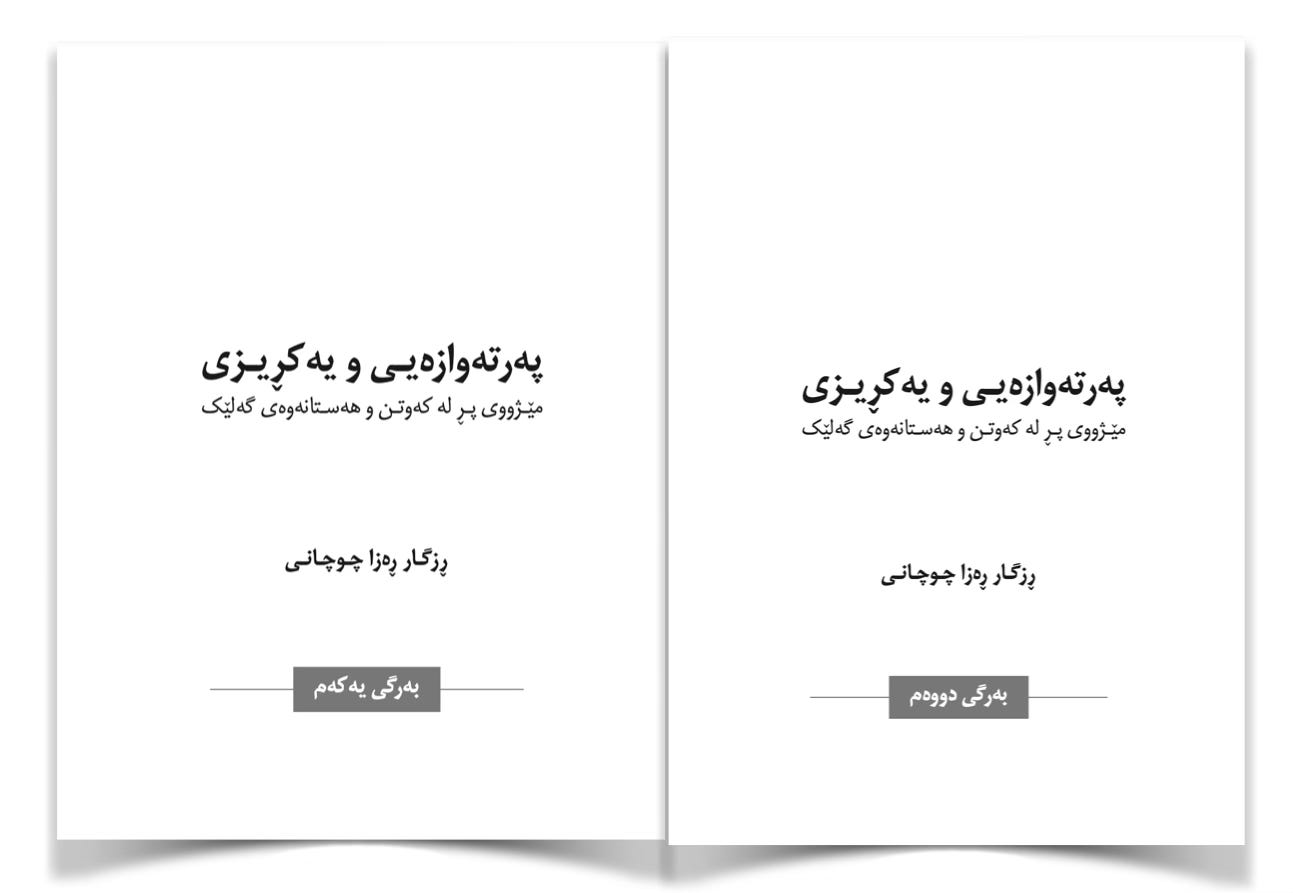
Today, Khaled presents us with two essays. In the first, he writes a review of Rizgar Reza Chochani’s Fragmentation and unity: A history full of a nation’s falls and resurrections (2024), currently unavailable in English, which documents how disunity has been the root of Kurdistan’s ills.
In his second article, in an act of Kurdish solidarity towards the Jewish people, Khaled reflects upon the reporting of October 7th in the New York Times, which he asserts perfects the art of blaming the victim.
Thanks again to Khaled for his contributions.
Please subscribe to Guerre and Shalom today for full access to all our articles!

ARTICLE 1:
“Holding a mirror of fragmentation and unity as a precursor to a Kurdish renaissance” by Khaled Salih
“You must change your mind, not the sky: though you may cross the sea, though you may flee to the ends of the earth, your troubles follow you.” — Seneca, Letters, 28.1
Rizgar Reza Chochani’s monumental two-volume work, Fragmentation and unity: A history full of a nation’s falls and resurrections (2024), arrives at a moment of profound introspection for the Kurdish people. This comprehensive historical account delves into the persistent struggle for self-determination that has defined Kurdish existence for millennia, meticulously documenting periods of both “profound adversity and remarkable resilience.” Chochani’s work is not merely a chronicle; it is a critical mirror, reflecting the enduring paradox that has shaped Kurdish destiny: the interplay of internal divisions and fleeting moments of unity against a backdrop of complex regional geopolitics.
The book’s central thesis, woven through its intricate historical tapestry, is that internal fragmentation has “consistently undermined [Kurdish] progress” and “long hindered the Kurdish people’s aspirations for growth, prosperity, and independence.” Chochani illustrates how the division of Kurdistan into Ottoman and Safavid spheres was not solely an external imposition but also “exacerbated by internal Kurdish disunity.” He reveals a history marked by a “lack of unity and common stance among the Kurdish emirs,” leading to significant losses and subjugation as the nation “could not protect its independence.”
Chochani spares no detail in exposing the devastating consequences of this disunity. He recounts instances of betrayal during revolutions, where tribal chiefs undermined figures like Sheikh Ahmed Barzani and Sheikh Said Piran, leading to their capture and the collapse of their movements. These narratives of disunity among Kurds, fragmentation, and betrayal by Kurds themselves paint a stark picture of a people often its own worst enemy. The harrowing phrase “ a sea of Kurdish blood was shed by Kurds themselves” vividly captures the tragic toll of internal conflicts, with external adversaries often merely observing. Even in modern times, Chochani’s historical lens illuminates how political manoeuvring has frequently overshadowed national goals, delaying progress on reform and independence, creating such distrust that it was not easy to overcome even after periods of civil strife.
By meticulously tracing these historical patterns, Chochani’s Fragmentation and Unity serves as an implicit, yet powerful, call for a new paradigm. It lays bare the historical vulnerabilities that have brought the Kurdish people to a critical juncture. Against this backdrop, the urgent need for a transformative approach becomes not merely aspirational but absolutely imperative. The Kurds urgently need a contemporary response to the historical challenges Chochani so thoroughly documents.
Chochani’s historical revelations make clear what the Kurds do not need in Kurdish leadership: those stuck in political manoeuvring where internal conflicts impede progress, academics fixated on footnotes who only catalogue grievances, and opinion-shapers safely producing abstractions, or bureaucrats whose only skill is mastering the politics of staying in their jobs. These are the very archetypes that have, through history, contributed to the fragmentation Chochani critiques.
Instead, a new vision, deeply informed by the lessons of Chochani’s historical record, Kurdish thought-leaders must champion action-first visionaries. These are builders, innovators, and practical dreamers whose leadership must be measured not by words but by visible, lasting achievements. Chochani’s historical account provides the deep understanding of adversity; and now, decisive actions required for a true renaissance. Such leaders must be:
Fearless truth-tellers. Confronting corruption, inefficiency, and failure head-on, even at personal cost. This is a direct antidote to historical betrayals and political correctness that obscured uncomfortable realities.
Deeply rooted, radically innovative. Grounded in Kurdish values but forward-looking, modernising education and fostering creativity for a new era.
Global in scope. Viewing the Kurdish struggle within a wider network of opportunities, strengthening ties not only within the region but across global political and economic landscapes.
Crucially, Chochani’s history, while often tragic, also hints at the capacity for reinvention in moments of upheaval. This capacity is exemplified by the Kurdistan Regional Government (KRG)’s journey. Following the early 1990s, the KRG embarked on significant reconstruction and institution-building. Despite enduring blockades and wars, it forged an independent oil policy, inviting international companies and reshaping the region’s economic landscape. This move created a significant source for Kurdistan’s budget, providing a critical step towards self-sufficiency and countering external economic pressures. The KRG’s commitment to transparency in its oil sector, engaging international auditors like Deloitte and EY, further highlights a move away from opaque practices that often fuel internal distrust.
The drive for economic diversification championed by leaders like Nechirvan Barzani (a long-serving Prime Minister), detailed extensively in contemporary analyses, directly addresses the vulnerabilities highlighted by Chochani’s historical narrative of dependence and economic fragility. This includes strategic investments in agriculture (dams, food processing), manufacturing (construction materials, furniture, juice factories), and tourism (over $6 billion invested since 2006). These initiatives exemplify the action-first vision required to build a multi-source economy and fortify social infrastructure.
Perhaps most importantly, in response to the historical internal divisions that are the cornerstone of Chochani’s work, the KRG has shown a capacity for overcoming fragmentation. Nechirvan Barzani is credited with fostering a unified stance and Kurdish political unity, transforming internal political fragmentation into political coordination. Historical efforts like “The Kurdistan Front” by Idris Barzani also proved pivotal in uniting forces. Embracing democratic processes, even accepting election results despite challenges, demonstrated a commitment to national interest over partisan conflict. This unified approach enabled the KRG to navigate severe crises, from budget cuts from Baghdad to the existential threat of ISIS, choosing unity and a courageous decision to persevere.
Chochani’s account of the Kurdish people’s falls and resurrections sets the stage for appreciating the KR’’s proactive diplomatic engagement. Efforts to improve relations with Turkey, Iran, and Western powers, even in the aftermath of the 2017 referendum, demonstrate a strategic shift from historical isolation and mistrust. The KRG’s portrayal of itself as “the other Iraq”, a stable, emerging region, secured international recognition for its progress in human rights and religious coexistence. The establishment of institutions for women’s rights and anti-corruption initiatives like the biometric system and Khidmat program further embody the action-first vision necessary to build trust and reduce internal friction.
In conclusion, Rizgar Reza Chochani’s Fragmentation and Unity is a vital, even foundational, text for understanding the Kurdish journey. Its detailed, often sobering, historical analysis of internal disunity and external pressures provides the indispensable context for the challenges faced by people of Kurdistan today. This comprehensive work implicitly underscores the critical urgency of the call to action. Chochani’s book meticulously chronicles why the people of the Kurdistan Region in Iraq find themselves at a crossroads; a vision, informed by this very history, then powerfully illuminates how the Kurds can ignite a true renaissance. For any serious student of Kurdish history, geopolitics, or the dynamics of national self-determination, Chochani’s Fragmentation and Unity is not just a recommended read, but an essential precursor to understanding the path toward a future defined by unity, prosperity, and an unwavering commitment to a bolder, action-first leadership. I sincerely hope that this two-volume book will be soon available in English.
ڕزگار ڕەزا چوچانی
پەرتەوازەیی و یەکڕیزیی: مێژووی پڕ لە کەوتن و هەستانەوەی گەلێک
دوو بەرگ
2024
دەزگای نوچە
Rizgar Reza Chochani
Fragmentation and unity: A history full of a nation’s falls and resurrections
Volume 1 & 2
2024
Dezgay Nûçe
Please subscribe to Guerre and Shalom today for full access to all our articles!

ARTICLE 2: “NYT and the Art of Blaming the Victims” by Khaled Salih
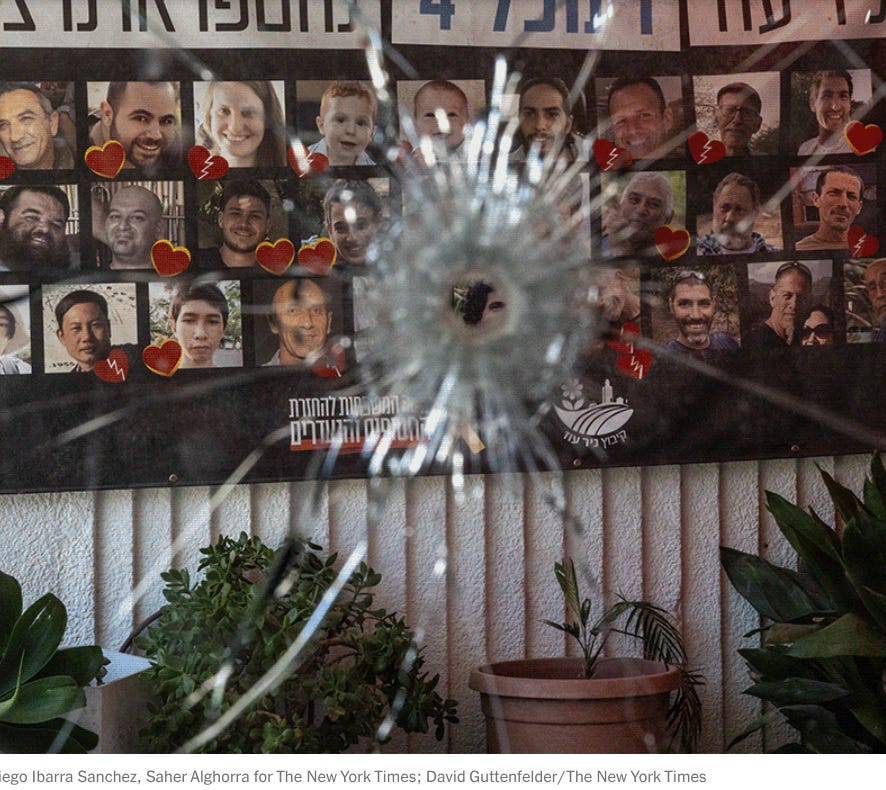
On October 6th, 2025, just as the world marked the second anniversary of the October 7th terror attacks, Roger Cohen of The New York Times published a fictional op-ed that serves as a masterclass in modern narrative warfare. His piece, titled “Israel at War With Itself,” advances a sophisticated and dangerous thesis, one that systematically reframes the victim of a horrific terror attack as the primary cause of the ensuing two-year conflict. This is not a straightforward accusation but a subtle and powerful journalistic technique of narrative inversion. Let’s deconstruct precisely how this inversion is achieved, revealing the architecture of blame that lies just beneath the surface of a seemingly reasonable argument.
The Plausible Veneer
Before deconstructing a narrative, it is strategically vital to first understand its explicit claims. By mapping the surface of an argument, we can better appreciate the depth of the structural biases that lie beneath. This section lays out the primary pillars of Roger Cohen’s narrative, demonstrating how its “reasonable” veneer is carefully constructed to mask a profound re-framing of cause and effect.

