



Foreword by the Editor (Daniel Clarke-Serret)
«....cuisine of bewildering technicality, some say avant-gardiste, where the Tian of Crab and Skate with Veloute of Cucumber is in itself an enigma, such an object of fascination that we hesitate to undo it. No irony here, just a vague sense of powerlessness in the face of a desire for perfectionism». Gault Millau Magazine.
Today “Guerre and Shalom” is honoured to welcome culinary superstar Richard Neat as a guest contributor. Richard was the youngest recipient of 2 Michelin stars for his establishment Pied à Terre in London’s Charlotte Street. His second recognition by Michelin in 1999 was for his restaurant in Cannes where he became the first Englishman to receive the honour in France. Richard honed his talents under the mentorship of Raymond Blanc at Manoir Quatre Saisons in Oxfordshire, Joel Robouchon at Jamin in Paris and Marco Pierre White at Harveys in London. His full and fascinating biography can be found at www.richardneat.blogpsot.com. He is opening a new restaurant at the award-winning “Retreat” in Atenas, Costa Rica in February 2025.
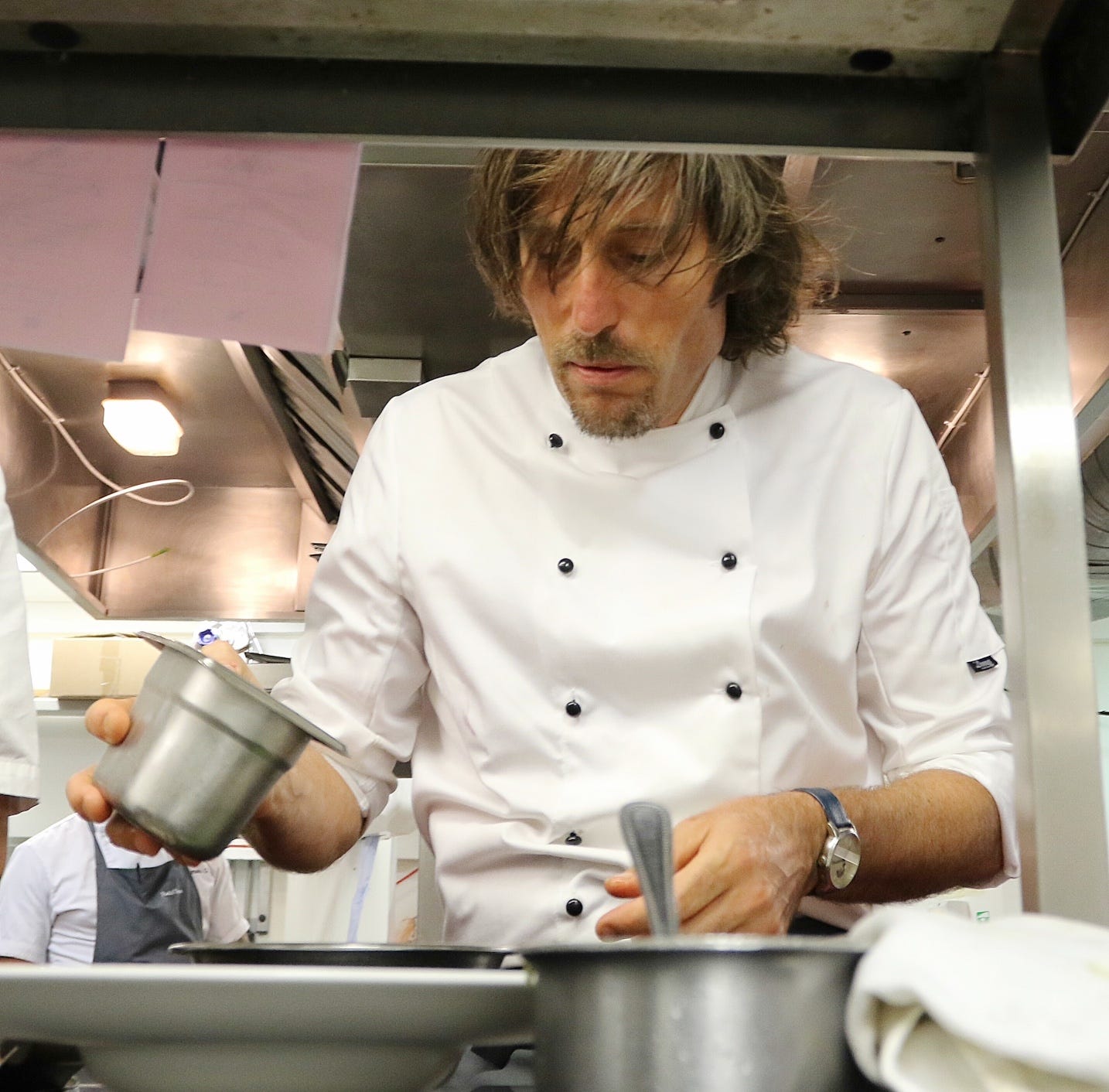
In Richard’s own words, his years in London were followed by “a nomadic life”. Having lived five years in Cannes, he went on to spend two years in India, two years in Moscow, two years in Marrakech, Morocco and the last eighteen years in Costa Rica where he currently lives with his English interior designer/antiques dealer girlfriend. At the time of writing, he can be found in Bali, Indonesia.
Outside of food, Richard has many interests from photography to philosophy to art to politics to chess which he plays at just below Masters level. Richard describes himself as a “18th century Burkean conservative and fanatically pro-Israel. In every conflict they’ve been forced to fight it has been morally unambiguous, good versus bad, civilization versus barbarity”.
Importantly for us, Richard is also passionate about writing, which includes 2 books, one of which is entitled “Observations in the Kitchen: A Backward Look.” In his fantastic debut article for “Guerre and Shalom”, Richard writes about the profound effect of travel on his philosophy and world perspective. Enjoy.
“Travel as an Education” by Richard Neat (the Nomadic Chef)
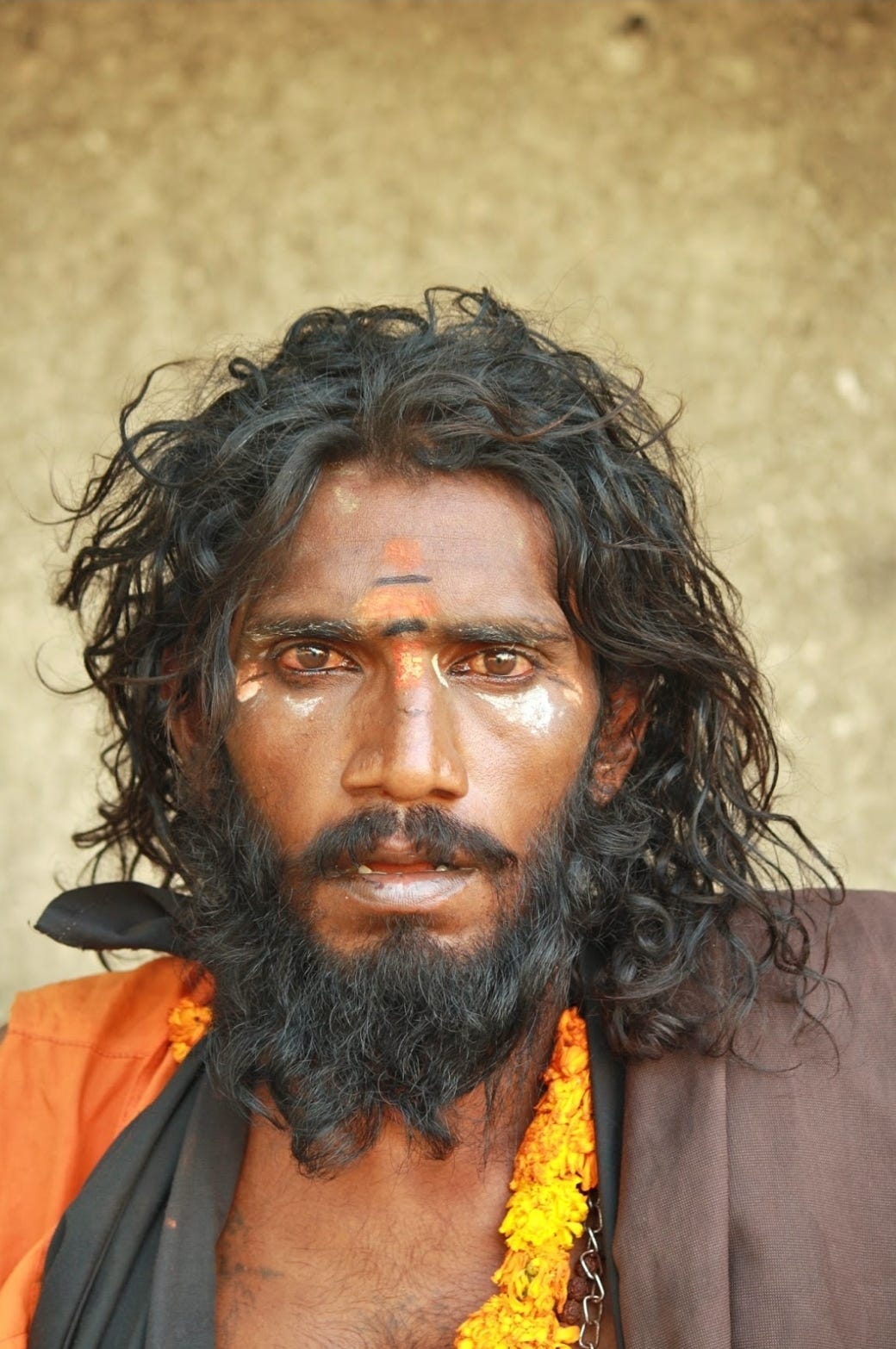
[Image: A photograph taken by Richard Neat in Ahmedabad]
A brief summary of the epic travels of Voltaire’s Candide might be how he profited by acquiring an education of sorts, at least an experiential one, along with a certain development and growth as a human being. He also eventually suffered disillusionment. It all sounds rather familiar. My own wanderlust is probably the result of five tough years in a subterranean kitchen in London’s Charlotte Street, earning Michelin stars, obsessing over the consistency of a chicken jus or the crispness of a pastry cover, though rarely glimpsing daylight, let alone the innumerable wonders that the world had to offer. And there it might have ended, until one day, I was overcome by a strange fear that I might wake up at the age of sixty having never seen the world, so days after receiving my second star, I did the logical thing and announced that I was leaving.
It’s not that I hadn’t left my country before, I had in fact spent two years in Paris with the legendary Joel Robuchon at his iconic Restaurant Jamin in Rue de Longchamp. Not only was this the finest education a young cook could receive, it was also the best education for any young person simply by being in Paris. You might say, the tastiest cultural amuse-bouche one could hope to enjoy. No friends, no money and every weekend off, though as a consolation the Louvre had a free entrance on a Sunday, so I found myself there every week, exploring every room, enjoying a crash-course in the ‘occasional genius of mankind.’
Anyway, after my Herculean efforts at my Pied-a-Terre Restaurant in London, I set off on my journey around the world, hawking my skills in places as varied and diverse as India, France again -but in my own restaurant- Morocco, Russia and lastly Costa Rica. Since arriving at this final destination, I’m still living out of a suitcase as I find myself traveling three months of the year through Europe and Asia, accompanying my girlfriend as she sources antiques for her furniture store in Costa Rica’s capital, San Jose.
So travel remains a constant feature of my life, though we’re enjoying it slightly less each year as governments around the world use Keynesian techniques to add layer upon layer of bureaucracy to the travel industry. Thankfully, we retain a shared passion for photography, the beautiful and the remarkable, whether by the hand of God or by man, which more-or-less provides the justification for suffering the ignominy of airport security.
We believe that once at our destination, it’s wise to sniff out the old town, as there seems to be a deliberate, or maybe demonic, uglification of much of modern life. The horizontal landscape of cities are now identical, where the same twenty corporations are camped out on everyone’s best bits of commercial real estate, all peddling their ghastly, indistinguishable products. There seems to be a lot of concrete, too many garish plastic signs, endless advertisements, too much functionality. This makes the old cultural and natural treasures even more important, though not simply because of their aesthetic merits, simply because you have to explore the history of a people to really appreciate them. Their religion, their cultural mores, their definitions of good and bad. Progressives from the Enlightenment onwards have tried to malign tradition, the irrational, incomprehensible bits that have supposedly ‘created monsters,’ though these incidentally are the same traits of ‘a people’ that Fichte, Herder, and others had thought defined our glorious distinctiveness.
And this is my Candidean moment of clarity that allows me to understand that the universalization of values and aspirations is truly repugnant. Instead, we should concede just one universal rule which is to pledge to never to do harm to another person's body nor property (I would also extend this courtesy to the rest of the sentient animal kingdom).
Recep Erdogan, the fascist President of Turkey, was absolutely right when he told a 10,000 strong crowd of Turks living in Germany that “assimilation is tantamount to a crime against humanity,” but not for the subversive reasons he imagined. Nobody disputes that Turkey has an incredibly rich, extraordinary cultural heritage (I’ve been to this wonderful country a half-dozen times) that must be protected from the banality of an anti-culture that aspires to recruit the malleable global denizen and clothe him in the same football shirt, oblige him to drink the same soda, eat the same hamburger and worship the same gods from the pantheon of Sports and Entertainment deities. Yet the specific Turkish values and traits that Erdogen thought should be guarded from assimilation are valid, authentic and meaningful only in Turkey, amongst other Turks, a truism that Herder articulated over two hundred years ago with the insight, “every nation speaks in the manner it thinks and thinks in the manner its speaks.”
Cultural exceptionalism can only be maintained by a robust defense of what the late English philosopher Roger Scruton so brilliantly defined as, ‘the first-person plural,’ in other words, the group of people who have lived amongst the ideas and objects their entire lives. On a recent trip to India, I travelled to Gujarat to visit the Modhera Sun Temple and Rani Ki Vav. They were extraordinary and provoked a feeling of awe, emotion and humbleness, yet I knew I could only enjoy them at a level of the dilettante, as to really appreciate them in their entirety, I would have to have been born a Hindu. Trips to Egypt, Indonesia, the entire length of Italy, have only reconfirmed the idea that the cultural treasures, political ideals, the religious insights and the devotional art their gods demanded are too precious to be compromised by the exigencies of the Health Care and Uber industries.
There are so many responsibilities of belonging, not least the participatory aspect of a ‘we-ness’, something that both Condorcet and Montesquieu recognized in their belief that a democratic system required the contribution and vigilance of an educated, enlightened citizenry, not only to function, but survive. Its about democratic duties and obligations rather than the trite and easily abused notion of democratic rights. Countries should be understood as something other than geographical expressions, they are places where history forged the present.
An argument of sorts could be made that the bits of the world that people are fleeing from to get to the West, the countries Trump so eloquently described as ‘shitholes’, could be transformed by developed nations implementing more humane trade and foreign policies, thus invalidating the urge for migration and these huge population transfers. This is of course assuming that the proud people of these countries should want to emulate the torturous history of the West to arrive at a comparable place to which we presently occupy, at least on occasion. Because, other countries, other peoples, if they stopped to think about it might not actually wish to imitate the West’s historical trajectory as even the most cursory reading of our blood-soaked, fratricidal history, informs us that there are many sequential and probably unreplicable episodes that created the Geist which in turn allowed the West to achieve its momentary global preeminence. In contrast, I love the story of Joshua ben Gamla, the first century Jewish priest who ordained that Jewish children from the age of six or seven should be educated. By this simple (?) act, he conferred a gift upon his people that elevated education and literacy to an absolute, this seminal fact provides a more plausible explanation for Jewish exceptionalism rather than the crude and bromide idea of a cabal of manipulative people sitting in a smoke-filled room, plotting the demise of their host countries. Culture matters and it has long term consequences.
In brief, its been a privilege to travel, to see and enjoy other peoples, to hear their stories through their rich and varied histories. I’ve always tried to be respectful to the peoples who have played host to me, worn long-sleeved shirts around the religious sites, ate their food, never asked for spaghetti carbonara in Nepal, nor Mexico City, never shook-people-down and paid whatever price was asked of me -even in Arabic bazaars. I’ve also made sure to tell them that what was exceptional, was actually exceptional. I’ve done all that and then - as the Egyptian pharaoh Akhenaten said, “to whom may I speak if nobody has my kind of ears” - returned home to excitedly discuss my travels and observations with someone with my kind of ears.
Advertisement
If you are interested in further writing on travel, consider reading this article, archived and therefore only available to PAID subscribers. Become a paid subscriber to enjoy the full “Guerre and Shalom” experience.
The Insider's Guide to Spain

Spain isn’t just Sun, sea and tapas. It’s more than throwing tomatoes at festivals and running in front of bulls. It’s a complex place with an intentionally short memory. And there are certain insights you need to know to understand this fascinating country. I have picked 10 below for you to feast upon; secrets that are only discoverable by those that l…
As always I’m in awe of your clarity of thought, the steadfastness of your moral compass, the utter refinement of your life, and the richness of your prose. Like eating at your table I find myself sated and craving more at the same moment.
I agree travel is an amazing privilege and I’m grateful to have had the opportunity to live in several different countries these last few years as well. I don’t agree with your ‘universal rule’ of never harming another person’s body or property, though. I don’t think it will be possible to follow, as crime must be punished and taxes must be levied for the good of society. And on the other end I am more ambitious, and I believe people are entitled to a greater range of basic human rights. These things usually wind up being not nearly as simple as they initially may appear.