



The first chapter of Part II — The States Against the Dream of Kurdistanî Azad is more than a must-read. It’s an emotional rollercoaster that will leave not a dry eye in the house. Without a hint of polemic, and written in an intentionally factual style, the sheer weight of the facts inspires the reader to heart-felt solidarity. The crimes of the Turkish Republic, undertaken in the name of modernity and progress, created a landscape of injustice that the reader is likely unaware of. The truth is such that emotional language is unnecessary (and the writers are admirably keen to showcase objections to their narrative), yet this makes the conclusion even more devastating.
Kurdistanî Azad: Available exclusively in Summer 2026 on Guerre and Shalom. Sign up as paid to read the work in full. (Chapters on Iraq, Iran and Syria coming out later this week.) It also allows you access to other published works including “Pure Jewish Anger. - Daniel Clarke-Serret (editor)

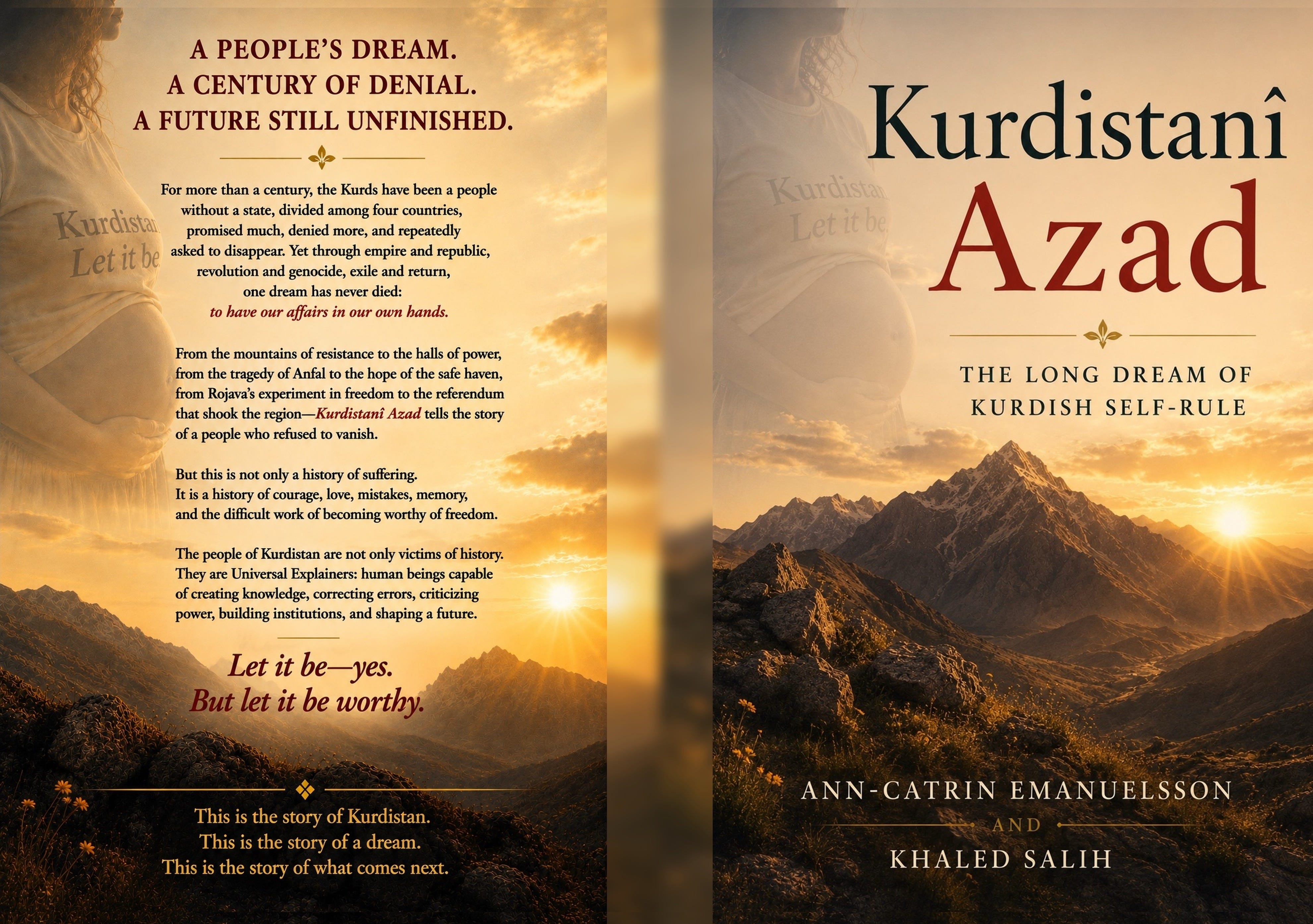
Kurdistanî Azad: The Long Dream of Kurdish Self-Rule
by Ann-Catrin Emanuelsson & Khaled Salih
Part II — The States Against the Dream
The modern state did not only divide Kurdistan; it taught Kurdish life to appear through the categories of others.
Part II Introduction

Chapter 4: In the Name of Civilization
Turkey: The Republic as Denial
The new republic did not arrive in Kurdistan as an invitation.
It arrived as an order.
The order was not only political. It was civilizational.
By civilizational, we mean more than modernization. It means a claim that one form of language, history, citizenship, schooling, law, and public memory represents progress, while other inherited forms of life must be disciplined, renamed, assimilated, or removed.
We argue that the Turkish republic turned Kurdish difference into a test of civilization: not by asking whether the new state could become plural, but by treating Kurdish language, memory, authority, and self-rule as backwardness to be corrected by force.
The men who built the Republic of Turkey did not imagine themselves as ordinary rulers inheriting what remained of a broken empire. They imagined themselves as founders of a new world. They would replace the old with the modern, the religious with the secular, the local with the “national,” the plural with the unified, the backward with the “civilized.”
In Istanbul and Ankara, this sounded like progress.
In Kurdistan, it often sounded like a warning.
The republic’s founding project aimed to produce a new people. It wanted citizens who spoke Turkish, learned Turkish history, served in the Turkish army, obeyed Turkish law, and imagined themselves as members of one Turkish nation. The old Ottoman world of overlapping identities, religious communities, local authorities, and imperial bargains was to be swept away, violently. The republic would no longer negotiate with difference in the old manner. It would transform difference, discipline it, or destroy it.
For Kurds, this was the first great collision with the modern state.
