


Guerre and Shalom’s EDUCATION FORTNIGHT continues…..
We all went to school. Our children go to school. We move houses to get our children into the best schools. We support government investment in schools. We applaud the opening of new schools in countries around the world. But we never stop to ask a very simple question: Is schooling a moral good? Because if it isn’t, we need to think a little more carefully about our above listed perspectives.
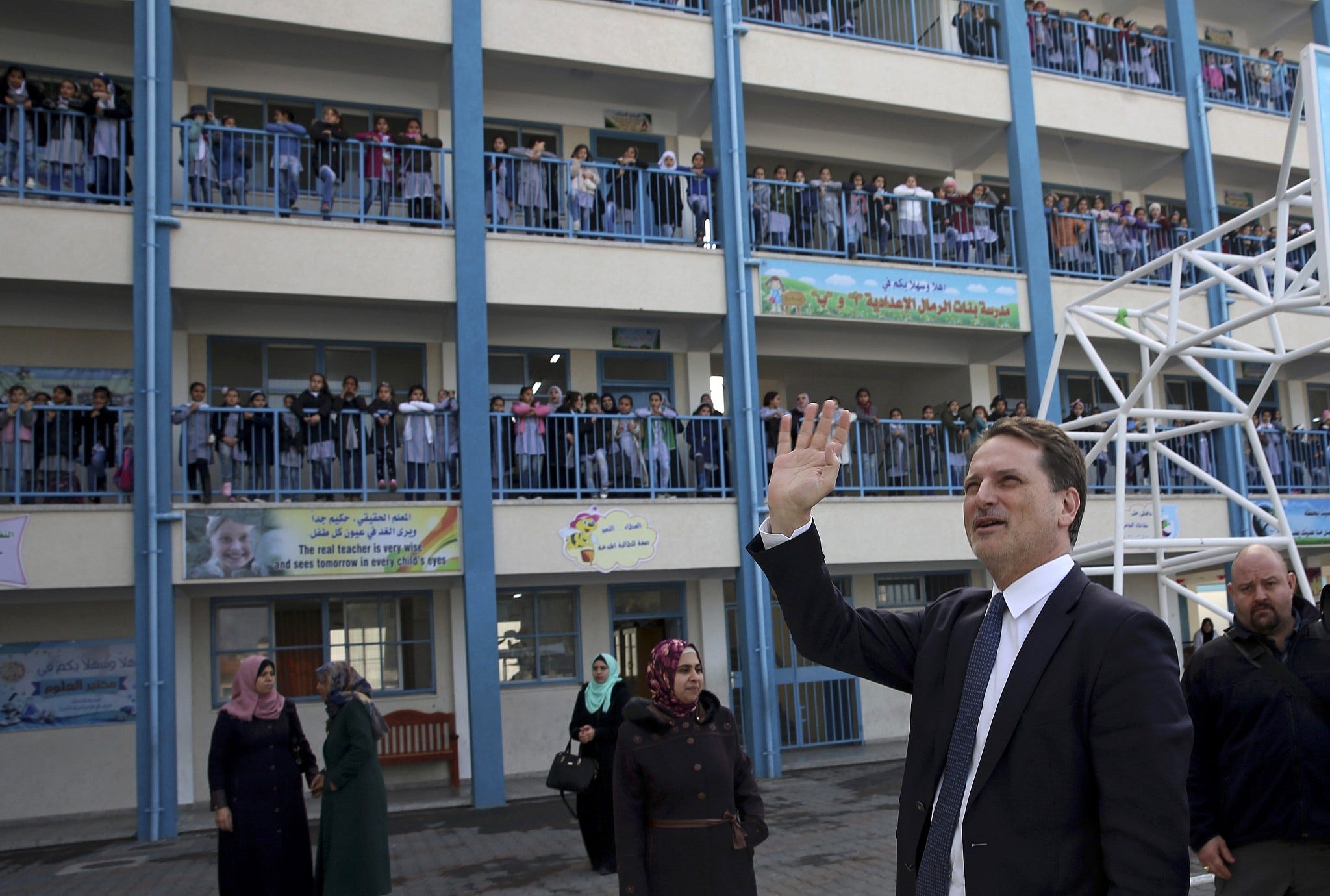
It is axiomatic that good education is good. But is education good in and of itself? To give a concrete example, what do we think about UNWRA schools in Gaza? If these institutions are used to teach hate or imbed unhealthy historical narratives or to perpetuate a refugee problem, would it be morally better if they hadn’t even been opened? Would uneducated Gazans be more educated than educated Gazans? And a similar argument can be made in countries all around the world from Russia to Sudan. To get to the conclusion of this line of reasoning, we first need to ask what education is for.
To consider this matter, I turn to a teacher from Finland, a teacher I heard interviewed by UK media in recent times. Now Finland is a democracy, an equality-loving nation and a bastion against tyranny. It is the furthest country one can get from the brutal dictatorships of North Korea and Eritrea. And significantly for our purposes, it is a country with a much envied education system. Year-in, year-out, Finland comes near the top, if not at the very top, of the PISA educational rankings.
So what makes this Nordic nation such a success in the teaching of its children? Perhaps it could be the continual professional development of its teaching staff? Or how teaching activities are adapted to the differing learning needs and the preferred learning styles of its students? Perhaps it could be its innovative teaching methods and its openness to change? Or perhaps it's simply its commitment to mercilessly coaching its students to succeed in public examinations? Not according to this teacher. When asked why the Finnish education system was so successful, she simply replied, “Because it teaches students to be good Finns.”
What a bombshell answer! Given the chance to wax lyrical about Nordic educational innovation, she demurred. She gave an answer that wouldn’t have seemed out of place in any other of the world’s 190-odd countries: To maintain the nation’s traditions. To transmit Finnishness to a new generation.
I am sure that a Saudi Arabian, Bolivian and Ivorian would concur. As would a Brit and Spaniard. Having worked in the latter two countries, I can confirm that an inordinate amount of - particularly primary - education is concerned with passing on the baton of tradition. No British winter term would be complete without week after educationless week on Christmas. And in Aragon, Christmas is but one of the autumn-winter traditions: here there is Halloween/All Saints Day, Constitution week and the granddaddy of them all: “Pilares” (Dia de la Hispanidad). To each one is consecrated unprecedented hours to do this or that activity which from my perspective is wasted learning time.
Yet not one parent complains about this misuse of the educational day. Each and every one of our parents seems to agree with the Finish interviewee: School is for teaching students to be a good (insert nationality). So universal is this belief that is it is at the heart of the debate about schooling in Israel where every community - Haredi (ultra-orthodox), secular Zionist Jewish, modern-Orthodox Jewish, Christian, Druze, Muslim - has its individual education system with the overriding aim of maintain the cultural status quo ante. The haredim are so keen on this belief that it is an ongoing struggle to even get them to teach Maths in their schools lest any teaching hours be taken away from passing the baton of tradition.
Yet it is here that we see a modern day educational paradox. For at the same time as rigidly maintaining traditions linked to the national religious calendar, with no quarter given to the sensitivities of minorities immersed in the annual Christmas lovefest, the Western educator seeks to breed a new generation of activists.
No module is complete without encouraging students to campaign for this or that fashionable cause. Out come the placards. Out come the slogans. Out come the persuasive speeches showcasing the power of three. The matter of the environment is the most well-worn of the activism clichés. Lessons about the Amazon Rainforest are rarely about the ecosystem itself: its flora and fauna, its people, nor the competing interests being played out. Instead it’s about what we can do to stop deforestation with “we” being 10 year olds who have no responsibility whatsoever for the current impasse. With minimal understanding of the complexities involved, students are taught to simply say abracadabra and change the world. And that a mere wave of the placard is all that’s needed to triumph.
So on one hand the modern pupil is taught to maintain cultural tradition in aspect. On the other they are taught to radically change their country (and the planet) through protest, marching and critical thinking. This schizophrenic potion of abrupt contradiction makes little sense. If we are to question everything and routinely incant sloganistic magic words, then why must we maintain a static sense of our way of life? Conversely, if we are to taught to become stagnant culturally (on pain of total social ostracism), then why are we indoctrinated to overturn the boat politically?
Whatever happened to conservative changes, slow societal evolution and a gentle decades-long journey to the promised land all the while welcoming immigrants who wish to integrate? The sacrifice of narrative to culture is at the heart of this conundrum; and it is the rediscovery of narrative that can lead us to resolution.
European nations see themselves in terms of pure culture. Spain is tapas and festivals and visits to the family village in summer. France is a way of dining, dressing with style and following the national calendar. Britain is Christmas. Eternal Christmas. And to be a “good Finn” is to be culturally Finnish. This is why foreigners flock to the Old World for their summer holidays; but it is also why the continent is dangerously stuck in the mud.
Narrative national development sees the nation in terms of its story instead of the majority's way of life. Each country, each region, each valley and town may have its separate cultural moeurs, but what makes the nation an entity combined is its journey through the Wilderness, moving when the pillar of fire bids its forward and resting patiently when Divine cloud of Glory marches no more. The children of the nation are not to see their country as superior, unimprovable or chosen for world domination, but neither are they to see it as a funeral pyre in need of total destruction. Instead they must embrace its political values, so tightly are they to be ingrained upon their hearts.
If the nation is insufficiently free they must navigate its institutions to seek out an improved path. If the nation is insufficiently compassionate, they must do likewise. The national institutions must be taught to be a sturdy vessel through which the collective can be improved and not as a walled castle to be scaled for the usurpation of power. The national student should see themselves as a desert nomad, a wanderer towards a better world in the patient company of their co-citizens. And they may not leave the elderly, the young or the fearful behind in their haste.
The child of the nation is no sectarian. They are one with their people. Not in agreement but as one nonetheless. The school is not a forum to persuade but a Parliament to debate. Agreement is not the objective, only the inculcation of the sense of national unity. That unity is not engendered through a shared culture, which many share only under suffrance, but through the respect of seeing your interlocutor as a human being, however misguided you may regard them.
Debate is the operative word. When the class debates the environment or history or immigration or any other matter of pressing concern, multiple viewpoints should be encouraged while maximum respect should be expected in return. Tolerance is both obligatory and conditional for it must be mutual by definition: tolerance taken, but not given, is a breach of cast-iron convention and an asault on the nation itself.
Through this dialectical process of respectful questioning, respectful hearing, respectful listening and respectful answering, a new society will be created. Or more properly stated, continued, evolved. A society which continues not to be based on race, religion, culture or origin, but on the willingness to engage properly in conversation with fellow citizens.
A child of 10 years old is in no position to “change the world”. They are still discovering it and they will never stop. Instead they are called upon to join a covenant started with their ancestors, a collective arrangement to evolve society in line with its most sacred principles.
Where the nation is acting hypocritically, in discordance with its stated values, it is there that change must eventually come, but in the right way, through the correct processes, with respect for diverse viewpoints and following mature debate. The school is not there to advance immediate, slogan-filled change. Its role is to fill the child with excitement; for a narrative born in a covenant long before they were born and with the duty to pass it on to their descendants. The child may indeed be destined to bring about change, but not as a act of revolutionary destruction; rather as a gift of collective love.
A covenantal society of debate is unafraid of cultural difference. Indeed it revels in it. And it welcomes the expansion of culture that immigration brings. But though it may welcome with tolerant curiosity, it states the corollary plainly and in a grave voice:
If you come to enrich; to join with us on our national mission of gentle self-improvement; then the national gates are yours upon which to knock. We may need to place annual limits on numbers, protecting national capacity, employment and local services, but we have no principled objection to your application. But to those that detest the national story of they with whom they wish to live, then the answer is no. You may not even approach the moat.
Moral education exists to bring citizens together as one nation on the train of destiny. It requires an ironclad commitment on the part of all parents and their children to agree to participate without distinction and see in their neighbours an equal partner for mature debate. And that commitment given, true education can work its magic.
So let us summarise in the briefest and locomotive of terms. Radical activism knocks the train off the tracks. Cultural uniformity keeps the train stuck in the station. Yet national, narrative solidarity creates a bullet train of purpose. So let us move forward with respect and quiet determination.
***
Schools do, of course, have another purpose - a purpose beyond narrative - which is why we are so keen for them to open up in Gaza and Libya despite the inevitable hate that will be taught there: to teach functional skills so that all children can make their way through adult life, and technical skills so that all children can go on to get “good jobs”, furthering the economy of the country. For Haredim and other monkish minorities this is a secondary matter. But even for those who place it front and centre, we still are called to ask the following: Is this necessarily moral? Or is it simply amoral?
As with almost any human endeavour, technical skills can be employed for both good and evil. A great engineer can construct a trainline through the Alps or a terror tunnel under the streets of Khan Younis. Both are no doubt masterpieces from a skills perspective. And both are examples of putting your education into practical use. Yet only one is moral endeavour.
Until recently, the talented graduates of Gazan education have been employed in promoting the economy of a terrorist statelet through weapons innovations and infrastructure building projects. Having been indoctrinated to be “good Gazans” and having learnt practical technical skills, children have gone out into the world to make it a more terrible place. And let us be clear: their schooling is to blame! Schooling funded with the UN’s (largely the USA’s) monetary backing. So why do we support it?
Now let me repeat: this isn’t just a problem in autocracies and repressive states. It is a problem even in Finland. The world over, the twofold aims of preserving our cultures/ideologies and teaching technical skills that benefit our national economies have dominated the educational reality.
Far from expanding the minds of our children, we have limited them to parochial and ideological boundaries.
Far from exposing our children to a range of perspectives, we have trapped them into the one-way thinking that our cultural-ideological matrix demands.
We have used education as a shield to defend our static way of life instead of challenging our students to make the world a ever-so-gradually better place. We have neglected mature, innovative thinking.
Occasionally a minority teacher like me comes along - a British Jew who teaches French in a bilingual English school in Spain - who sees it as their mission to smash the comfortable status quo and open up our children’s eyes to horizons beyond their shores.
Yet me and my subject and my attitude are a sideshow. I can teach Hebrew on the European Day of Languages, inform Aragonese students about the Jewish history of their city and produce scriptless Shakespeare-inspired theatre productions at Christmas. But I am not why the kids come to school. They come to maintain their traditions, however beneficial or close-minded or sometimes harmful they may be; and that is so in Spain, in Britain, in Israel, in Finland and in Gaza.
So to conclude: Good education is good. Great education is great. But most education is at best amoral if not, in some cases, evil. Which is why value-based, narrative-driven, covenantal education is the only educated way forward.

Previously on Guerre and Shalom’s EDUCATION FORTNIGHT:
ARTICLE 1 (On university scholarship):

ARTICLE 2 (On Free/Charter schools and State partnerships with the private sector):

ARTICLE 3 (On behaviour in the classroom and the reality of modern teaching):

ARTICLE 4 (On civics education and student activism):

ARTICLE 5 (On teacher status):

ARTICLE 6 (On unnecessary top-down changes in education driven by political churn):

Fascinating piece, Daniel.
My question: if "value-based, narrative-driven, covenantal education is the only educated way forward," what narrative should be taught to the students in, say, Jordan? The United Arab Emirates? Somalia? Iraq? Pakistan? Or any other nation slapped together by retreating colonial administrators? What are the Stories that will animate and inspire the kids of those nations?
"[T]he Western educator seeks to breed a new generation of activists"...because the professoriate (for lack of a better term) and all our other aspiring bureaucrats of thought (teachers, intellectuals, journalists etc) have long since congealed as a class and have repurposed their fields to no longer be about the student and his/her needs, but about the social, career and political needs of this class.
Our University-processed intellectuals consider themselves a permanent shadow govt or even a ruling class in exile and their project since the 60s has been to create a mass movement based on the ideology we know as Social Justice, with the ultimate hope and goal of gaining total power for their social-engineering schemes. Essentially their project aimed at seizing the means of cultural and educational production and installing their ideology as an official state faith, some cross between the Vatican and the Politburo. (And they succeeded beyond their wildest dreams.)
This helps explains why they turn their charges into angry, brittle and confused rage addicts who know nothing about the world except that they want to "change" it—they've essentially been weaponized for other people's causes. And this hostile takeover has exented to everything from culture to morality to history, all of it co-opted by the radical professoriate and reconfigured for their purposes.
The West handed over the responsibility for the transmission of its cultural patrimony to people who hate it and who have successfully deconstructed it. This is why many more people are now indoctrinated but not educated. Aspiring social controllers don't want educated citizens, they want them docile, miserable and easily manipulated. If you have any interest in free thought or expression (or in a real education for your child), you need to steer far clear of academia, which is where these things go to die.