To see behind the paywall on this and all other serialised “Guerre and Shalom” books, please consider a paid annual membership. It’s a bargain at £45/$58.
PAX ARABICA is my groundbreaking new work exposing the Arab World for the colonial entity it is. As the chapters pass, we will be looking into the nature of this Empire, its Palestinian vanguard, its dictatorial fragility, the oppression and expulsion of its minorities, its denial of national self-determination and how Arabs have mistakenly turned to Islamism as an escape from imperial oppression. We will turn our regard to those brave few who have fought the imperial menace and consider how Israeli-Palestinian peace could come about in a post-imperial age.
PART 1: BABEL
Introduction: The time to change the narrative is now! // Chapter 1: On Arab Imperialism // Chapter 2: On the Vanguard //Chapter 3: On Dictatorial Oppression // Chapter 4: On Islamist “Freedom” // Chapter 5: On Islamist Misery // Chapter 6: On Arab Apartheid // Chapter 7: On Middle Eastern Minorities // Chapter 8: On the Masters of Ethnic Cleansing // Chapter 9: On Genocide, Slavery and Racist Indifference //Chapter 10: On Unjust “Justice” and the Inversion of Language // Chapter 11: On Appeasement // Chapter 12: On the Man who stood against Pax Arabica
,In Part 2 - “EDEN” - we chart the journey to a Middle East of regional security, ordered peace, meaningful self-determination and genuine national sovereignty underpinned by a complete decolonisation of PAX ARABICA. We describe how a semblance of order is being maintained in the current, lawless “Wild West” phase and we provide a vision of post-imperial peace for the future.
PART 2: EDEN
Chapter 13: On Nations, States and the Nation State // Chapter 14: On Sykes-Picot // Chapter 15: On Zionism and the duty to protect // Chapter 16: On the New Regional Sheriff
COMING SOON: Chapter 18: On the Paradigm Shift // Chapter 19: On the Post-Imperial Two State Solution // Chapter 20: On the End of the Great Game
[From prisoners-dilemma.png]
PAX ARABICA
CHAPTER 17: On the Psychology of Strength
RETRIBUTION BRINGS “PEACE” TO THE WILD MIDDLE EAST
Is it rational to be rational?
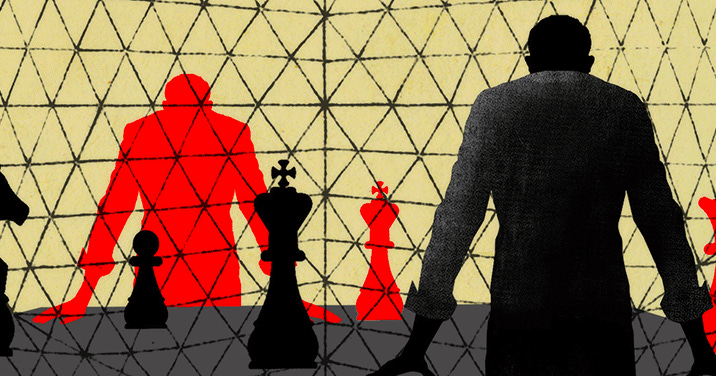
Let us conduct a thought experiment. $10 are on the table and you and your partner have to decide how to distribute it. You alone may give the offer. Your partner must then decide to accept or reject. Should they reject, both of you get nothing1.
These being the parameters, what is the logical course of action for you to take? Assuming that one may only offer a positive integer, the rational offer would be for you to tender $9 so that your partner would receive $1. That way you would maximize your personal profit while screwing your interlocutor. If they were to reject, they would get nothing and $1 is better than nothing. Unsatisfying as the inequality may sound, a rational partner would have no choice but to surrender to your power.
But as we all know, people aren’t rational. Seeing the unfairness of such a skewed distribution, many would choose to reject purely out of spite. Better that we both get nothing than you profit from your extortion.
In the context of a pure game scenario, where the participants play but one time, the human penchant for revenge would cost you. You really would be a fool to reject the offer. But in the context of real life, where exploitation and manipulation are all part of the “fun”, acting irrationally in the very short term would be highly rational in the long term. It's what one might call rational irrationality. Being aware that the other party is easily exploitable, the party that makes the offer would likely repeat the trick over and over again. The nice guy rarely wins. It would be far better to continue rejecting until the offeror begins to treat you with equality and respect. In the long term, and extended out to an entire community, a more equal distribution would breed trust, human capital and non-transactional, respectful relationships.
Why does Syria’s ISIS President like Israel more than Ireland?
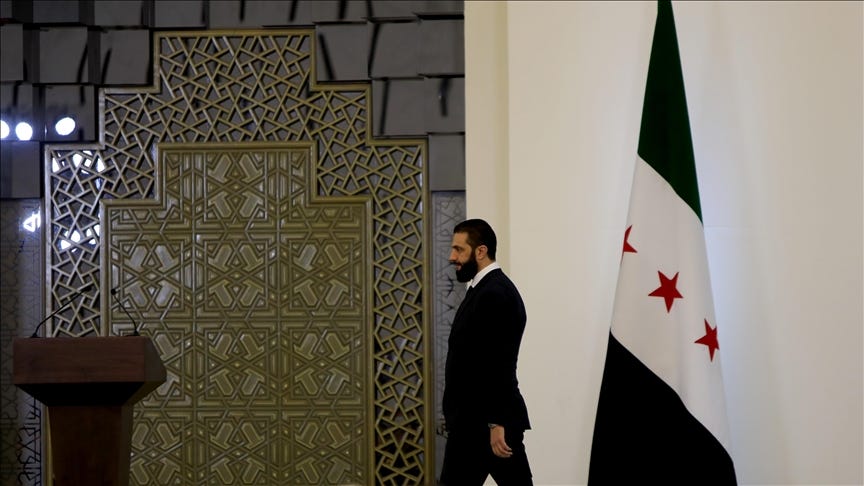
[What does he understand that the Irish don’t?]
We begin with this preamble to greater understand the geopolitical context of the Middle East and the somewhat counter-intuitive responses of the various parties. For decades, left-wing Israeli governments passionately sought peace and offered all in their power to achieve this hallowed goal. From 1937 to 2008, every conceivable offer - bar suicide - was put on the table, yet peace was rejected each and every time. Pax Arabica and its vanguard repeated “No! No! No!” and at every turn, they placed rejectionism above a better future. No matter how secular the Arab government, the knee-jerk Imperial reaction was the same — we will accept nothing but Israel’s destruction.
By placing imperial goals above its own development, Pax Arabica transformed itself into a lawless Wild West, where rejections of indigenous national identity were prioritized over internal cohesion. The Middle East metamorphosed into a violent hellscape —competing factions, only united by their common focus upon eliminating minority diversity, fought Israel and each other with equal hate. We have seen the results. Israel itself had to take the responsibility of fighting for the Druze. Israel itself had to become a regional Sheriff to protect the entire region from Iranian nuclear destruction. Israel survived and thrived, but did so in the absence of peace and in a climate of gathering hostility.
It is with this backdrop that recent events have the capacity to surprise. Despite Israel having elected the most extreme right-wing government in its history and Arab governments being more Islamist than ever, there seems finally to be a chance of peace in the Middle East — albeit a cold understanding founded on mutual defense against Iran, the need for post-oil economic development and, above all, the psychology of strength.
So today, we have liberal democratic Western countries such as Ireland which have gone out of their way to boycott Israel, even to the extent of self transforming the definition of genocide.
Yet at the same time, as regards the Israeli actions in Gaza, there has been a wall of almost complete silence from Arab, Middle Eastern governments. There has been barely a whiff of condemnation from Morocco, Bahrain and the UAE. Egypt and Jordan have maintained diplomatic relations and even official enemies such as Saudi Arabia have kept their diplomatic cool. Most extraordinarily of all, the newly installed Syrian government has engaged in negotiations for entry into the Abraham Accords, even contemplating ceding much of its claim to the Golan Heights.
When the reader takes into account the nature of the Syria government, that it is currently run by a former ISIS terrorist committed to Islamist domination of the world, this seems nothing short of incredible. Granted it likely won’t lead anywhere, but given that Israel currently occupies much of Southwestern Syria and is prepared to bomb army positions when it threatens the embattled Druze minority, the fact that we are even talking about normalisation agreements is a matter requiring further analysis. In brief, what the hell is going on?!
As journalist Nachum Kaplan commented in a Guerre and Shalom podcast interview2, he can foresee the situation where Israel will be rejected by much of liberal Europe at the same time as being in a state of normalized “peace” with much of the authoritarian Middle East. He’s right. The question is why.
Understanding Tribal Societies and Honour-based Violence