


The Noble Peace Prize Committee has lost all moral judgment. First they awarded Barack Obama the prize for peace potential. Then they awarded it to Abiy Ahmed before he became one of the world’s worst warmongers. Then they surpassed themselves by awarding it to Navi Pillay for spreading The Great Genocide Blood Libel.
In light of their incomprehensible decision-making processes, Guerre and Shalom has taken matters into our own hands. What we are about to say is neither ironic nor polemical. From now on, Guerre and Shalom will award an annual Global Peace Prize to someone who actually deserves it. This year is a little bit rushed due to events, but next year we will take down nominations from readers and invite the eventual winner to write an article in response.
So with no further ado, it is our honour to award this year’s G&S Global Prize for Peace to:
Hon. Irwin Cotler
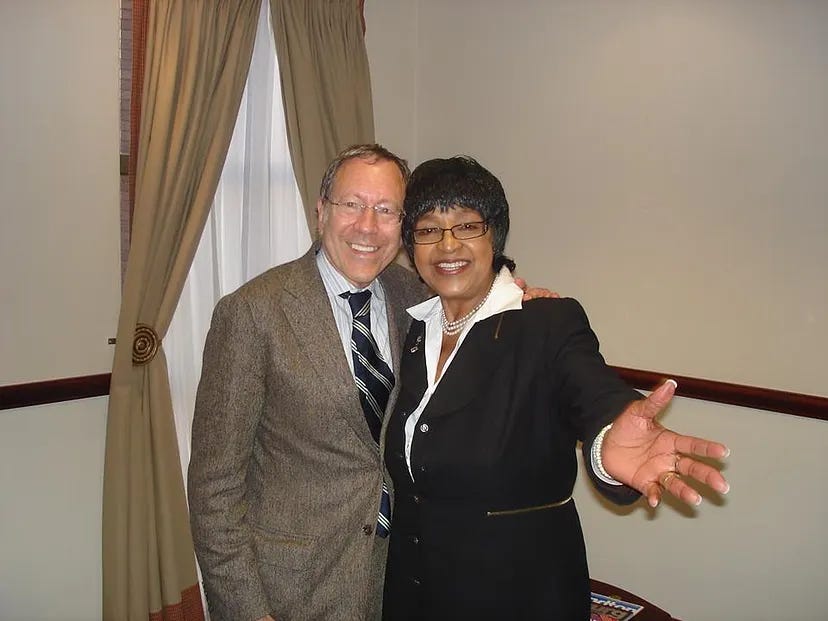
Irwin is the mentor of my mentor, so hopefully he will receive our decision and be able to respond. In any event, below is our presentation speech.
Guerre and Shalom has decided to award the Global Peace Prize to Hon. Irwin Cotler for his lifelong defence of human rights, his courage in confronting oppression and hatred and his unwavering belief that justice is the foundation of lasting peace.
For more than half a century, Irwin Cotler has demonstrated that the defence of human dignity requires not only legal knowledge, but moral courage. As a lawyer, scholar, parliamentarian and international human rights advocate, he has dedicated his life to protecting those whose freedoms have been denied by authoritarian governments, discriminatory systems, and campaigns of hatred.
Cotler’s commitment to human rights was forged through direct confrontation with injustice. During the struggle against apartheid in South Africa, he stood in solidarity with those fighting racial oppression. He became part of the international legal effort to defend those who challenged the apartheid regime, including his work as counsel for Nelson Mandela, whose imprisonment had become a symbol of the global struggle against racial injustice.
In 1981, while visiting South Africa as a guest of the anti-apartheid movement, he delivered his historic address, “If Sharansky, Why Not Mandela?”, drawing attention to the persecution of both Soviet dissidents and South African opponents of apartheid. Following that speech, he was detained by the South African authorities and questioned by the apartheid government. Rather than retreat in the face of intimidation, he returned to Canada determined to continue the international campaign against apartheid and to support the struggle for freedom and equality.
That same conviction guided Cotler throughout his career. He became known internationally as “counsel for the oppressed,” representing prisoners of conscience and political prisoners whose governments sought to silence them. He advocated for Soviet Jewish refuseniks denied the right to emigrate, defended dissidents such as Natan Sharansky and worked on behalf of victims of persecution around the world.
In 2001, Cotler returned to Durban, South Africa for the United Nations World Conference Against Racism. At a conference intended to confront hatred and discrimination, he spoke out against the presence of antisemitism and against attempts to transform a forum against racism into one that targeted Jewish communities and the State of Israel. He insisted that the fight against racism must be universal and consistent: no community’s dignity can be defended by denying the dignity of another.
As Minister of Justice and Attorney General of Canada from 2003 to 2006, Cotler brought these principles into public service. He launched Canada’s first National Justice Initiative Against Racism and Hate, advanced legislation addressing the trafficking of women and children, initiated Canada’s first prosecution under the Crimes Against Humanity and War Crimes Act for the genocide of the Tutsis in Rwanda and worked to strengthen the independence and diversity of Canada’s justice system.
After leaving government, Cotler continued his global human rights work through the Raoul Wallenberg Centre for Human Rights, defending human rights defenders, prisoners of conscience, and victims of persecution. His work has reflected a consistent principle: that international law and human dignity must not depend on nationality, religion, political power or public opinion.
In recent years, Cotler has been a prominent voice in the rejection of allegations that Israel’s actions constitute genocide, while maintaining that the protection of civilians and respect for international humanitarian law are essential obligations in every conflict. His position reflects the central conviction that has guided his life: human rights must be defended consistently and without prejudice.
Irwin Cotler is honoured today because he has shown that peace is not achieved through silence or indifference. Peace requires the courage to confront injustice, the wisdom to defend universal principles and the determination to protect the rights of every human being.
For his lifelong commitment to justice, freedom and the defence of human dignity, the G&S Peace Prize is awarded to Hon. Irwin Cotler.
Irwin’s must-see recent speech at the “A Canary's Song: Antisemitism in Our Free and Democratic Society” Conference:
The latest chapter of The Genocide of Truth, the book that tears down the foundations of The Great Genocide Blood Libel:

Prof. Irwin Cotler is most deserving of this award!
Excellent choice!
From Betty Ehrenberg (email)
Excellent choice!