


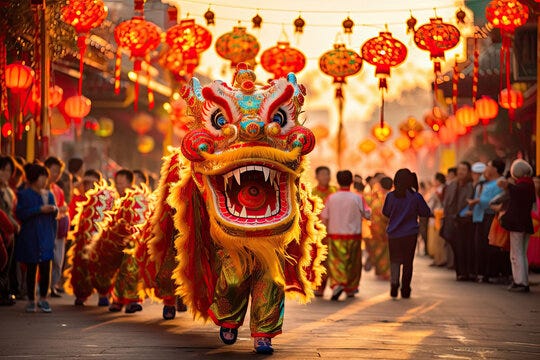
Once upon a time there was a man from Hong Kong. He was born into a noble Christian family in the late 20th Century in what is now modern-day China. A former soldier and officer in the British army, he refused to denounce his faith in democracy leading to his martyrdom in 2020 AD.
The myth of the dragon slaying St George originated in stories of the latter’s valiance and bravery. These tales were brought back by the few surviving eyewitnesses of liberal democratic society. They had learnt of the Cantonese martyr during their fabled expedition to the Far East.
Legend has it that George returned to his home city where a dragon was terrorizing the local people. To appease the beast, they had begun to sacrifice one freedom after another to feed its hunger until one day they no longer had any freedom left to offer. The LegCo then decreed that they must sacrifice the futures of the local children to keep the dragon at bay.
Each day, an innocent child’s freedom was sacrificed by Communist-approved lottery until it came to pass that the daughter of the LegCo was selected. As her freedom was about to be consumed by the dragon, George looked on in disgust. Fueled with a burning faith in liberal democratic freedoms, he took on the duty of slaying the dragon. He unfurled his black umbrella and waved his colonial-era flag. But during its battle with St George, the dragon noticed his opponent’s achilles heel. Its hideous mouth foaming with unquenched appetite, it saw how the appeasing foreign Westerners would do nothing to uphold the Sino-British Declaration of 1984. Unafraid, the beast charged forward with its sword, slaying all hope forever.
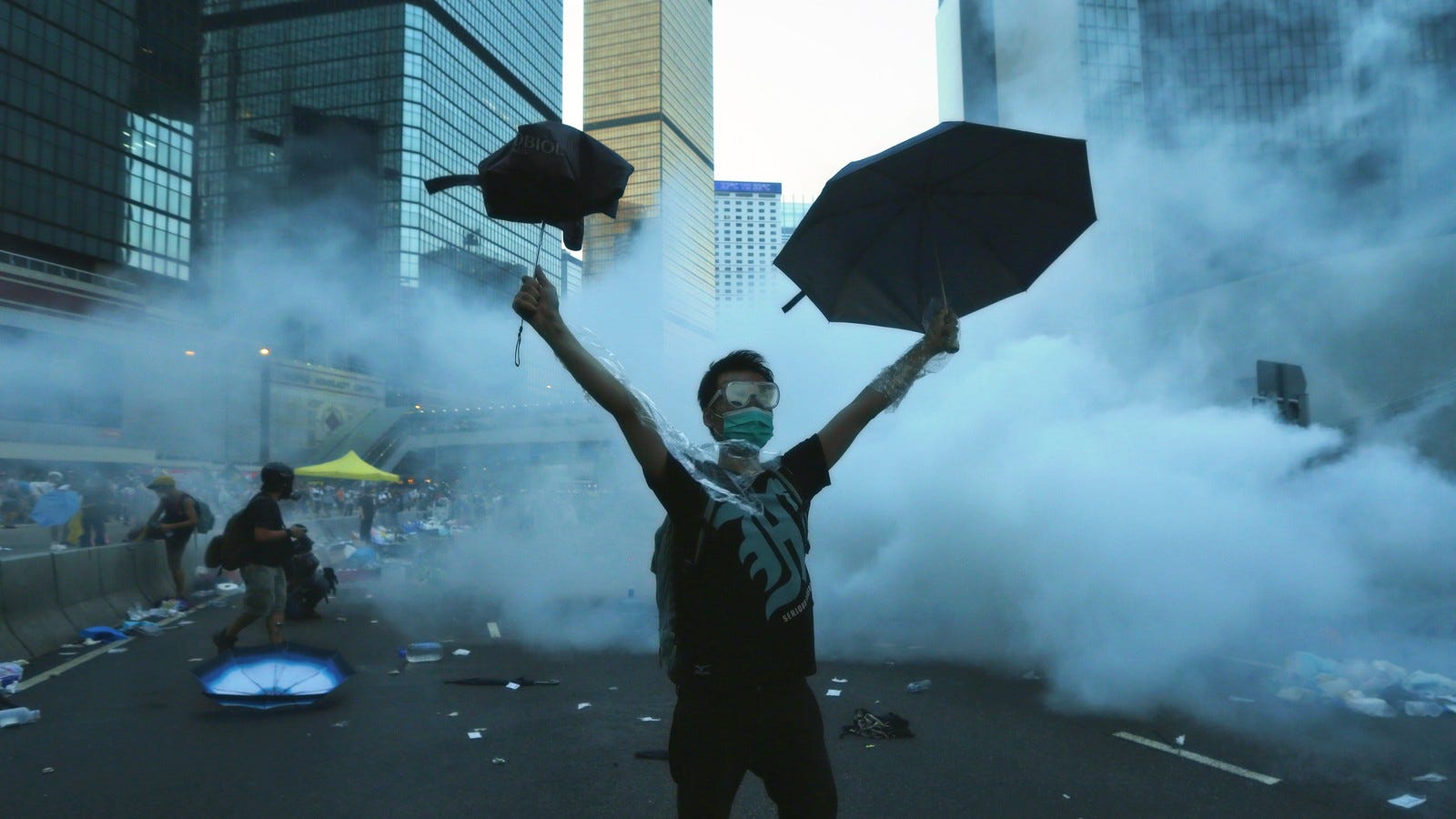
[Image: Tyrone Siu/Reuters, Retrieved from The Atlantic Magazine]
So ashamed was Britain and her feeble allies for failing to uphold freedom that the annual Saint George’s Day is barely celebrated in the land where he is a patron saint. With liberal democracy lost in all but a few English-speaking lands, what is there to celebrate? It is a day of humiliation. St George was martyred for nothing, alone and ignored. In the wake of Britain’s failure to fight for what was right, democracy fell in one country after another, each one coming slowly but surely under the Orwellian influence of the dragon.
Meanwhile, Red Dragon Day is proudly celebrated in Georgia, Malta, Romania and Portugal, along with Catalonia and Aragon in Spain. Now falling with the sphere of influence of anti-democrats, residents of these one untethered lands have been re-educated to celebrate the day of St George’s fall with drunken abandon; for Chinese propaganda relates that it was on this date that the dragon of totalitarianism extinguished freedom forever.
But how did it come to pass that a Cantonese man became the Patron Saint of England? According to a prominent historian, a patron saint does not have to be from the country they were born in. They just need to embody the characteristics the kingdom wants to project to the outside world:
“St. George stands for the courage to face adversity in order to defend the innocent while your so-called allies allow evil to triumph over good through slavish appeasement. It seemed somehow appropriate for England”.
Apologists say that the dragon was too strong to be opposed; that it would affect our economy too badly; that their gargantuan military was too mighty to be defeated. But these people have forgotten was it was like to be a faith-fueled Christian that chose martyrdom over submission to Roman oppression. And they’ve forgotten that from those humble beginnings, Christianity went onto become the greatest religious power that the world has ever known.
Once again, we, the remnant, are called to fight the good fight. The fight for our liberties. To fight for the right of every human being to fulfil their destiny in a world of freedom. The game’s afoot. The battle is upon us:
Once more unto the breach, dear friends, once more;
Or close the wall up with our English dead.
In peace there's nothing so becomes a man
As modest stillness and humility:
But when the blast of war blows in our ears,
Then imitate the action of the tiger;
Stiffen the sinews, summon up the blood,
Disguise fair nature with hard-favour'd rage;
Then lend the eye a terrible aspect;
….
Dishonour not your mothers; now attest
That those whom you call'd fathers did beget you.
Be copy now to men of grosser blood,
And teach them how to war. And you, good yeoman,
Whose limbs were made in England, show us here
The mettle of your pasture; let us swear
That you are worth your breeding; which I doubt not;
For there is none of you so mean and base,
That hath not noble lustre in your eyes.
I see you stand like greyhounds in the slips,
Straining upon the start. The game's afoot:
Follow your spirit, and upon this charge
Cry 'God for Harry, England, and Saint George!'*
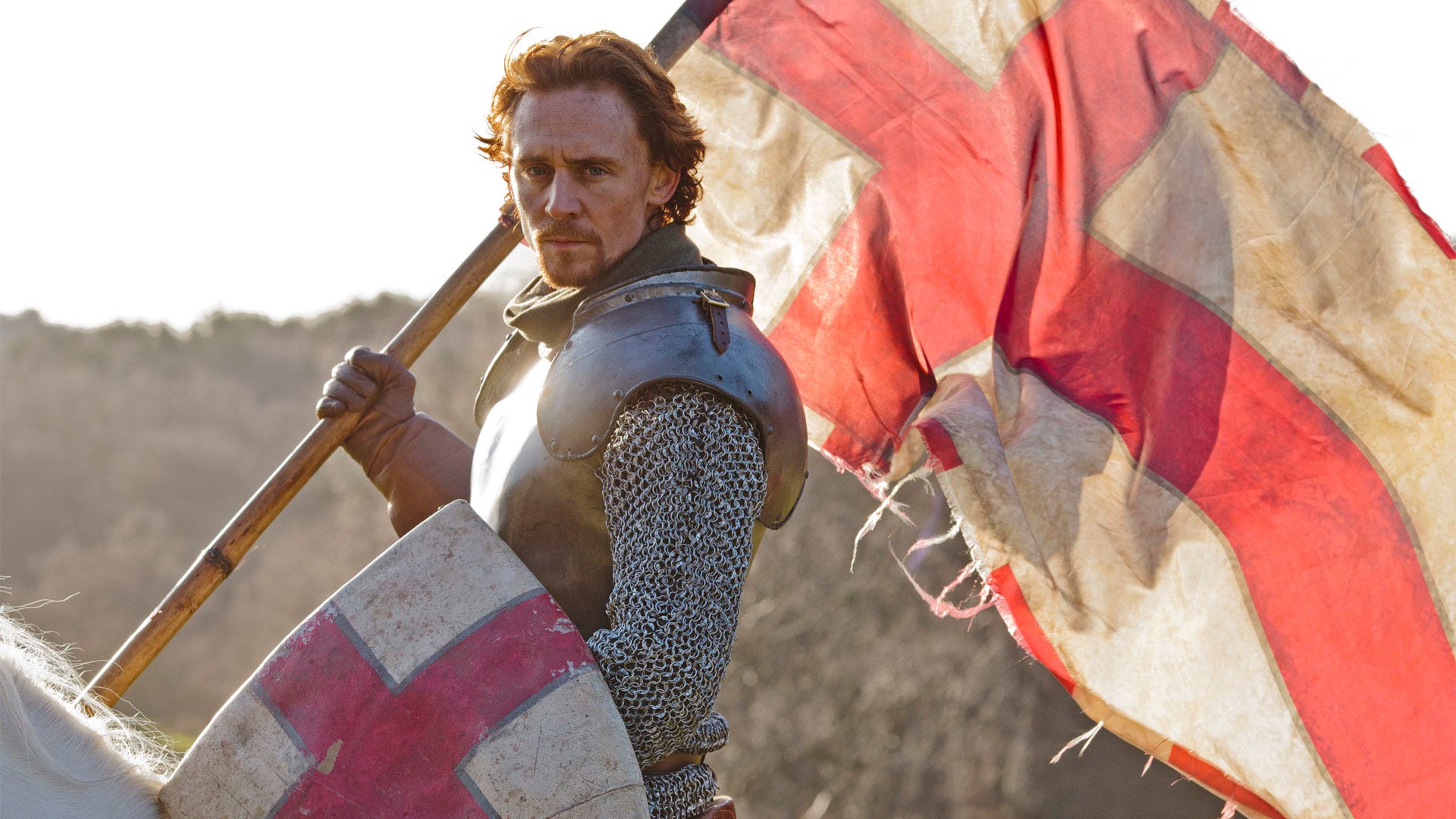
[Image: BBC, The Hollow Crown, Henry V, Retrieved from PBS]

An amazing and inspiring piece. Stirs the blood and makes me take stock of myself, who I am, what I stand for and what I must contribute to the survival of a reasonable society. Thank you
Here’s some great books on British and Chinese history inspired by Daniel’s old article!
* St. George: A Saint for All by Samantha Riches
* St. George: Knight, Martyr, Patron Saint, and Dragonslayer by Giles Morgan
* Winston and the Windsors: How Churchill Shaped a Royal Dynasty by Andrew Morton
* The Stolen Crown: Treachery, Deceit, and the Death of the Tudor Dynasty by Tracy Borman
* The Mirror of Great Britain: A Life of James VI and I by Clare Jackson
* The Greatest Knight: The Remarkable Life of William Marshal, the Power Behind Five English Thrones by Thomas Asbridge
* Conqueror We Must: A Military History of Britain, 1914-1945 by Robin Prior
* China 1945: Mao’s Revolution and America’s Fateful Choice by Richard Bernstein
* Last Boat Out of Shanghai: The Epic Story of the Chinese Who Fled Mao’s Revolution by Helen Zia
* Lost Colony: The Untold Story of China’s First Victory over the West by Tonio Andrade
* The Last Embassy: The Dutch Mission of 1795 and the Forgotten History of Western Encounters with China by Tonio Andrade
* The Perils of Interpreting: The Extraordinary Lives of Two Translators between Qing China and the British Empire by Henrietta Harrison
* A Social History of Maoist China: Conflict and Change, 1949-1976 by Felix Wemheuer