


To incentivize Muslim communities to purge these extreme elements from within, we need to create external pressure that makes it untenable for Muslims to maintain both their religious identity and credibility in public life without actively denouncing extremism. In other words, we need to make it so that the cost of not speaking out against radicalism is higher than the cost of doing so. This can only happen if accusations of extremism or illiberalism within the Muslim community are taken seriously and not simply dismissed as Islamophobia.
(Vaishnav Sunil)
Friend of Guerre and Shalom Vaishnav Sunil applies hard statistics to the issue of Islam and Islamism. It is the latest outstanding contribution to Theo Van Gogh Memorial Fortnight. -Daniel Clarke-Serret (Editor, Guerre and Shalom)

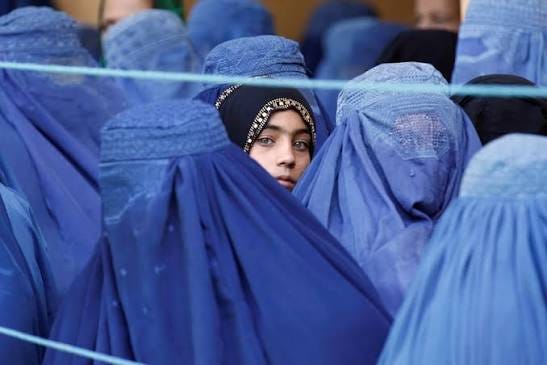
Nine years after Ben Affleck accused Bill Maher and Sam Harris of being “gross” and “racist” for criticizing Islam, Sam Harris engaged in a frustrating 90-minute debate with Rory Stewart on the same topic. Rory, armed with a posh British accent and constant appeals to authority, managed to sound reasonable while insisting that basic statistical inference would be an epistemic mistake when discussing Islam.
Rory fell back on his “lived experience” in Muslim communities, suggesting that Muslims are diverse, heterogeneous, and mostly just normal people trying to live their lives – all of which isn’t disputed by most reasonable people. In fact, as Sam Harris tries to point out, it’s people who are keen to exonerate Islam that might be forced to attribute pernicious Islamic laws and norms to something “inherent” about Muslims as people.
Their conversation, though frustrating, provides a framework for identifying key points of contention. Here, I intend to tackle three questions: Is Islam a meaningful variable when analyzing geopolitical risks, terrorism, and threats to freedom and human rights? How seriously should we take the theocratic aspirations of Islamist movements, and what are the implications for free societies? And finally, how can we foster an environment that encourages reform within Islam and empowers liberal Muslims to speak out against extremism?
The wrong question: Who gets to define Islam?
Rory Stewart: I concede that there are versions of Islam that are problematic. Groups like ISIS, Hamas etc. are mostly horrible. And you can’t understand them without understanding the strong religious motivations that underpin their ostensibly crazy actions. However, I don’t think there’s just one Islam. There are many different Islams - why do you let ISIS or the Ayatollahs in Iran define what Islam is rather than Muslim clerics who disavow violence and advocate peace?
Rory, and people in his camp, often respond to descriptive claims about Islam and Muslims with normative arguments about whom they would like to empower to define Islam as a religion. This line of thinking is not too different from the argument of some liberal women that mainstream feminism is really stupid these days, but real feminism, which they have the authority to define, is really good actually.
Yet these discussions elevate the theoretical above the actual. If most people calling themselves feminists and making careers as feminists have bad ideas, then at some point we need to be able to criticize feminism (à la Bryan Caplan). For a more extreme illustration, imagine you’re in the late 1930s, trying to make the case that German nationalism is problematic, citing the rise of antisemitism, subversion of political norms and an ideological obsession with reclaiming national pride that is likely going to lead to bad outcomes. Your debate opponent responds with the following:
“I agree that German nationalism can be problematic and has problematic elements, and I’m no fan of the Nazi leadership. But there are plenty of decent people who love their country and want to see it rise and prosper, and support peaceful means to get there. Why not empower the good actors to define what it means to be a German Nationalist?”
Your beliefs about who should get to call themselves the real German nationalists doesn’t change facts about the current momentum and character of an ideology, the power structures that control the dissemination of that ideology or the relative popularity of good and bad ideas within it. Now, there may be times, perhaps like at the end of World War II, when the Allies probably did want to empower liberal Germans to redefine German national identity, after having completely dismantled the previous system.
But if you’re having a debate in the 1930s about the source of all the worrying developments you see around you, pointing a finger at a particular ideology obsessed with righting historical wrongs and ensuring German revival would be a pretty good place to start. Similarly, arguing about what constitutes “real Islam” is futile, since the point of this exercise is not to judge Islam in some abstract way. It’s to identify the common variable that’s driving the cluster of bad outcomes/behaviors that we’re concerned about in a hope to point us to the right solutions.
Is Islam the right variable to focus on?
Now one could reasonably ask - Is Islam even the right variable to hone in on? One can find examples of reprehensible behavior by Muslims that is not attributable to Islam, for example the horrendous practice of female genital mutilation.
Female genital mutilation (FGM) is prevalent in many Muslim countries. Yet, one can find little justification for the practice in the Quran. More importantly, the countries with the highest prevalence rates are heavily concentrated in North Africa, and many non-Muslim tribes and countries in this region also practice it. If you aimed to identify the causal drivers of this practice impartially, your focus would shift from Islam to the cultures and traditions of African tribes in the region.
Unfortunately, for a whole basket of other problems, Islam, the religion, seems to be a reasonable variable to drill down on. One such problem is rates of political violence and terrorism. Rory’s instinctive response to this is to claim that most of the violence in the world doesn’t have much to do with Islam; and that he doesn’t see Muslim regions of the world as that much more violent than non-Muslim regions. This is either vague enough to be meaningless, plainly false or attacking a straw man. If he means that Islam as a variable doesn’t explain most (>50%) of the variance in violence and war globally, that’s obviously true. But no one variable can explain most of almost any complex phenomenon.
I ran a quick regression to check how levels of violence within countries correlate with the presence and influence of Islam within a country. I used the Global Peace Index developed by the Institute for Economics and Peace, which scores countries on levels of violence, as the dependent variable, and proportion of the population that identifies as Muslim as the independent variable. We can explain ~16% of the variance in levels of violence within countries using the % of Muslims in the population.
How much better does per capita GDP do at predicting violence - lower levels of which most people would intuit correlate with higher levels of violence. Slightly better, but not by much - it explains about 19% of the variance in global violence. The proportion of Muslims within a country only explains 5% of the variance in per-capita GDP between countries. So it’s not just that Muslim countries tend to be poor and poor countries tend to be violent.
If you’re unconvinced, try to think of other variables that might yield a stronger correlation. I doubt % of Christians would do it, or any other religion for that matter. Perhaps some measure of democracy might do better (but the potential for reverse causality is high there, since countries that are violent are unlikely to develop democratic institutions)
The claim that gets thrown around then is that radical Islam is to blame, not the religion per se. But what exactly does the term “radical Islam” refer to? It’s not a special sect within Islam or some category that can be neatly separated from the rest of the religion. It’s just what we use to refer to members of Islamic groups who do bad things in the name of Islam.
It’s true that some revivalist strains of Islam, like Salafi Islam, which originated in Saudi Arabia and advocates for returning to the 7th century life of the Prophet Mohammed, have radicalized previously moderate Muslim populations, in places like Malaysia or Kerala, India. But these moderate Muslim populations were able to be radicalized because the tenets of Salafi Islam have ample support within the text of the Quaran, which they already accepted as unassailable.
But the problem is not limited to the Saudi export of Salafi Islam. A majority of the religious fighters that formed the Taliban were drawn from Deobandi seminaries, a strain of Islam which has its roots in 19th century South Asia, and the greatest geopolitical threat that Islam currently poses is in the form of the Islamic Republic of Iran, which has not only birthed several hardline Shia militant groups like Hezbollah, but has also formed coalitions with Sunni groups like Hamas in an attempt to unite against the infidels.
A common counterargument is that Western foreign policy, rather than Islamic ideology, is the primary driver of Muslim violence worldwide. Notice that conceding this argument doesn’t make much of a difference. No one is arguing that Islam doesn’t interact with other forces in the world, or that it is monocausally responsible for all these ills. The claim is that given contact with the outside world and perceived grievances like oppression, invasion, or humiliation by non-Muslim powers, Islamic doctrines makes it much more likely that these grievances are channeled into violence with worse expected outcomes.
More importantly, if the motivations were purely political, we wouldn’t see second and third generation Muslim immigrants in the West, who enjoy political freedoms and economic opportunities, being drawn to jihad. The 7/7 London bombers and the perpetrators of the Paris Bataclan attack, for instance, were citizens of democratic countries, not people under direct foreign occupation.
We also wouldn’t see the cavalier willingness on behalf of Islamist groups to murder Muslim civilians en masse, particularly Shia Muslims and other religious minorities, who had nothing to do with Western foreign policy. The prevalence of sectarian violence and the targeting of “heretical” or “impure” Muslims points to the significant role of religious ideology in justifying and directing terrorism, beyond mere political grievances with non-Muslim powers.
It thus seems clear that Islam, as a religion and ideology, is a significant variable that cannot be ignored when analyzing the drivers of political violence, terrorism, and sectarian conflict in the modern world.
Disagreement #2: How much of a geopolitical threat does Islam and Islamism pose?
While it’s true that Islamic terrorism isn’t the most likely source of catastrophic geopolitical risks, it’s important to remember that the world we live in now is a function of our efforts since 9/11. We decimated Al-Qaeda’s leadership and infrastructure, and stopped ISIS in its tracks, precisely because we took this threat seriously. As Richard Hanania argues in his piece on the American Empire, we can’t use statistics from today’s world order to argue for a live and let live approach with Jihadists, which would very likely produce different outcomes.

