


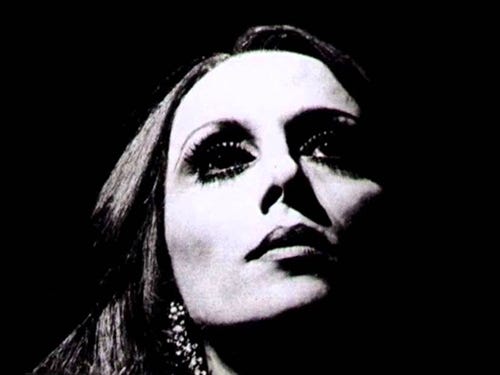
[Image: The legendary Lebanese singer Nuhad Haddad, commonly known as Fairuz]
“It is time to effect a revolution in female manners - time to restore to them their lost dignity - and make them, as a part of the human species, labour by reforming themselves to reform the world. It is time to separate unchangeable morals from local manners.”
― Mary Wollstonecraft, A Vindication of the Rights of Woman
My studies at Aix-en-Provence university are somewhat of a blur; the intricacies of the French penal code having long deserted me. But away from the faculty at Avenue Robert Schuman, I learnt something of immense value, both in terms of personal development and political disposition. For what I discovered on the well-dressed streets off Cours Mirabeau will live with me forever; I gained an unforgettable - and heartbreaking - insight into Arab society.
Let us begin with Leila. Leila was a dear friend that I met in my cité universitaire (halls of residence). One day, we went undercover and infiltrated the university Arab society. Hardly an exploit worthy of Eli Cohen, but illuminating nonetheless. There we went along with a hijab-draped companion from Djibouti (the first time I’d heard of that country) and together we sat politely among the overwhelmingly male audience. I fitted right in. The topic? Lost to the shifting sands of history. But Palestine inevitably made an appearance near the end to excitable applause. I still haven’t understood the purpose of the two heavies marching up and down the aisles of the ampitheatre. In synagogues, external security is the order of the day, but here it was all about internal control. Who were they protecting themselves against? Me? No matter. In Mizrachi Southern France, Jews and Arabs are indistinguishable. So perhaps I’ll make it to Syrian deputy minister of defence after all?!
Leila and I liked to experience local culture; we went for a coffee where Churchill used to frequent and watched a comédie musicale at the town theatre. I was expecting something like Andrew Lloyd Webber. What I got was farce. Literally. I asked Leila whether she would like to go out in Nice, her place of birth. She wasn’t keen. Her family would find out. A single Arab with a single non-Arab man? She would get into trouble. Well how about Cannes? She had cousins there. Marseille? There too. Bourgeois Aix-en-Provence was just beyond the family radar system. Her male relatives were described like spies, ready to report on her every movement. She just couldn’t be “caught”.
From her time in England, Leila had a long-distance boyfriend. To you and me this may not sound controversial. After all, he was a Muslim. But he was a Pakistani Muslim. Her parents wouldn’t have approved. I mean they really wouldn’t have approved. In their eyes, only an Arab man would do. The consequences of being found out on the town with Daniel - or her beau from Birmingham - were never spelt out. But all was painted in the darkest of terms. Here was a French citizen, an intelligent women in a top university in a Western country, and yet there was the palpable feeling that she wasn’t free. That her every move was under surveillance. That one wrong move could have the most serious of consequences.
But if things were bad for Leila, they were worse for Loubna. On one level, Loubna was the luckier of the two. By all accounts her parents were “liberal-minded” and happy to live in a free country. Her father came from Morocco, but he was glad to have left. “The country disappointed him”. And he was looking forward to arranging a holiday in Israel. Hafez Al-Assad he was not. Indeed I met Loubna in the local synagogue; she was a close friend of the Jewish society vice-president. You get the picture: the French Youssef Haddad.
Yet we must be clear: she was a proud Arab. Proud Muslim? Perhaps not. Barely practising, if at all. But a proud Arab? Yes, at least in terms of cultural identity. She tried to learn Arabic, with about as much success as your average British Jew learning Hebrew. But Arabic phrases peppered each and every one of her conversations. “Insh’allah” in particular. She was a natural born singer, a lover of the songtresses of Lebanon. “She sung for Beirut” she said of one, wistfully. How little things change. And as with so many of us, her artistic dreams were crushed under the societal expectation to make something of herself. She was studying law.
With Loubna, it wasn’t her parents that were a problem. They were supportive and kind. I even met her cousin Munir; and he seemed a lovely fellow, as he puffed stereotypically on a freshly-lit cigarette while sipping on sweet tea. It was the reality of Arabness that weighed her down; the reality of female apartheid throughout the Arab world; the fact that one could not be a free Arab women. As a singer she appreciated the irony. She could not sing of freedom in the theatre halls of Mosul or on in the streets of Saudi Arabia. To be Arab was to be part of a beautiful aesthetic culture, but to be fundamentally unfree. To be a woman was not to exist.
What was Loubna’s dream? To sing in the Arab World, yes. But more importantly to do something to help its women. She said this with melancholy. A forlorn task it was. An impossible task. She had a dream, but no possible route to achieving it. She herself had tried to be with an Arab man. A boyfriend who would understand. But he hit her. This was an experience that marked her deeply. An experience that only underlined her hopelessness and only cemented her despair. An identity is not something that one can just jettison. She couldn’t just close her eyes and awaken resurrected as non-Arab. It was who she was. A burden.
These are the dilemmas facing the Arab woman everyday. Are they to live or really live? Are they to love or die not-loving? Are they able to make a change? Or even escape? Is their serfdom an unchangeable fact of their existence? I am not speaking about those destroyed by slavery in Bahrain and apartheid in Saudi Arabia. They have no chance whatsoever. I am talking about relatively secular, culturally Arab women of France. People who we would see as liberated and free. But the reality is that Riyadh and Cannes aren’t so different. The apparent freedom of the French Arab making their imprisonment even more unbearable.
I don’t know what became of Leila. Did she marry her Pakistani boyfriend? Did she defy her family? Did she strike out on her own path or was she buried by the weight of cultural threat?
I don’t know what became of Loubna. Is she singing for liberation in the streets of Lebanon? Or is she case-handling in the law offices of Provence, repressing her barely concealed hate for male Arab domination?
What I do know is this. Their experiences moved me. Profoundly. And this testimony is my pathetic attempt to improve their condition. My response to the suffering - and the dreams - of Leila and Loubna.
Mary Wollstonecraft wrote A Vindication of the Rights of Woman in 1792.
Daniel Clarke-Serret wrote A Vindication of the Rights of Arab Women in 2024.
Enough already.
Advertisement
If you are interested in more analysis of French Muslim culture, consider reading this article, archived and therefore only available to PAID subscribers. Consider becoming a paid subscriber to enjoy the full “Guerre and Shalom” experience.
The right to wear (and not wear) the hijab

The fight for freedom in Iran is not just any news story. It goes to the core of my most treasured beliefs.
Thank you Daniel. Very moving.
And let’s not forget those poor 72 virgins in Arab heaven. What did they do to warrant such a disgusting fate?